

Your digging level
Description
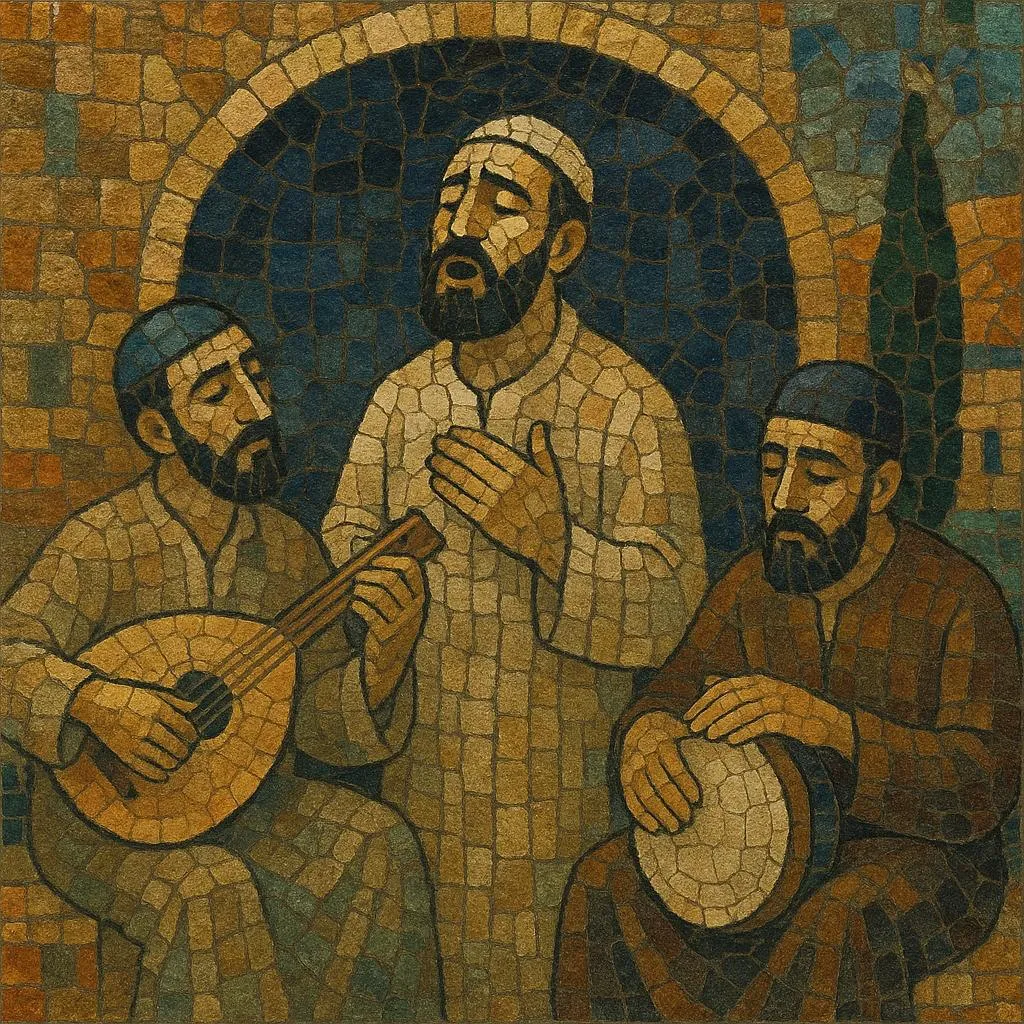
Baqashot are a traditional Sephardic Jewish devotional repertoire consisting of supplications, liturgical poems (piyyutim), and prayers that are sung communally.
They are most famously performed as an extended Shabbat-morning vigil beginning in the pre-dawn hours and lasting until sunrise, especially during the winter season (commonly from Sukkot through Purim).
Musically, baqashot performance is closely linked to Middle Eastern modal practice (maqam) and to the poetic/liturgical traditions of Sephardic communities, especially Syrian, Moroccan, and Turkish Jews.
The style is primarily vocal and communal, emphasizing responsorial singing, ornate melodic lines, and a prayerful atmosphere rather than dance rhythms or pop-song structures.
History
Baqashot developed within Sephardic Jewish communities living under Ottoman rule, where Jewish liturgical poetry and synagogue practice interacted with surrounding Middle Eastern musical systems.
The repertoire consolidated as organized cycles of pre-dawn Shabbat singing, especially flourishing from the 1600s onward.
Different Sephardic sub-traditions formed distinct baqashot practices, notably Syrian, Moroccan, and Turkish communities.
The service is traditionally held on Shabbat mornings in winter, when longer nights make extended pre-dawn vigils feasible.
In contemporary practice, the Ades Synagogue in Jerusalem is widely recognized as a center of the Syrian baqashot tradition.
Moroccan baqashot practice remains active in communities such as Ashdod and Montreal.
Despite changes in broader Jewish musical life, baqashot persists as a living devotional tradition transmitted through communal participation and oral/learned repertoire.
Write baqashot as devotional liturgical poetry settings intended for communal singing, often in a long, meditative sequence rather than as a single standalone “song.”
Structure your piece so it can be led by a soloist (hazzan/leader) and answered by a choir or congregation.
Choose a maqam (mode) appropriate to the text and the community’s local practice.
Compose a singable core melody with room for ornamentation, since leaders traditionally elaborate with melisma and improvised-style turns while staying within the mode.
Keep rhythm flexible and speech-like for many sections, especially where the text is prayerful or supplicatory.
If you use steady meter, keep it restrained and supportive, avoiding strong dance grooves; the goal is sustained devotion through the pre-dawn vigil.
Harmony is typically minimal; focus on unison or lightly heterophonic textures (multiple voices singing the same line with slight variations).
If accompanying instruments are used in a modern context, keep them subtle and modal (e.g., oud, qanun, violin, ney, frame drum used sparingly), prioritizing the voice.
Set piyyutim and supplications in Hebrew (and, depending on tradition, occasional Judeo-Arabic or other community languages).
Match melodic emphasis to the natural accents of the Hebrew text, and use melisma to highlight key spiritual words or phrases.
Rehearse call-and-response cues clearly so the congregation can join confidently.
Plan a gradual emotional arc across multiple pieces: begin contemplative, build intensity and vocal brightness near dawn, and resolve into a calmer concluding atmosphere.

