Your digging level
Description
Banga is a processional trance music and ritual performance associated with the Black communities of the Tunisian island of Djerba, particularly in ceremonies honoring the saint Sidi Marzûq.
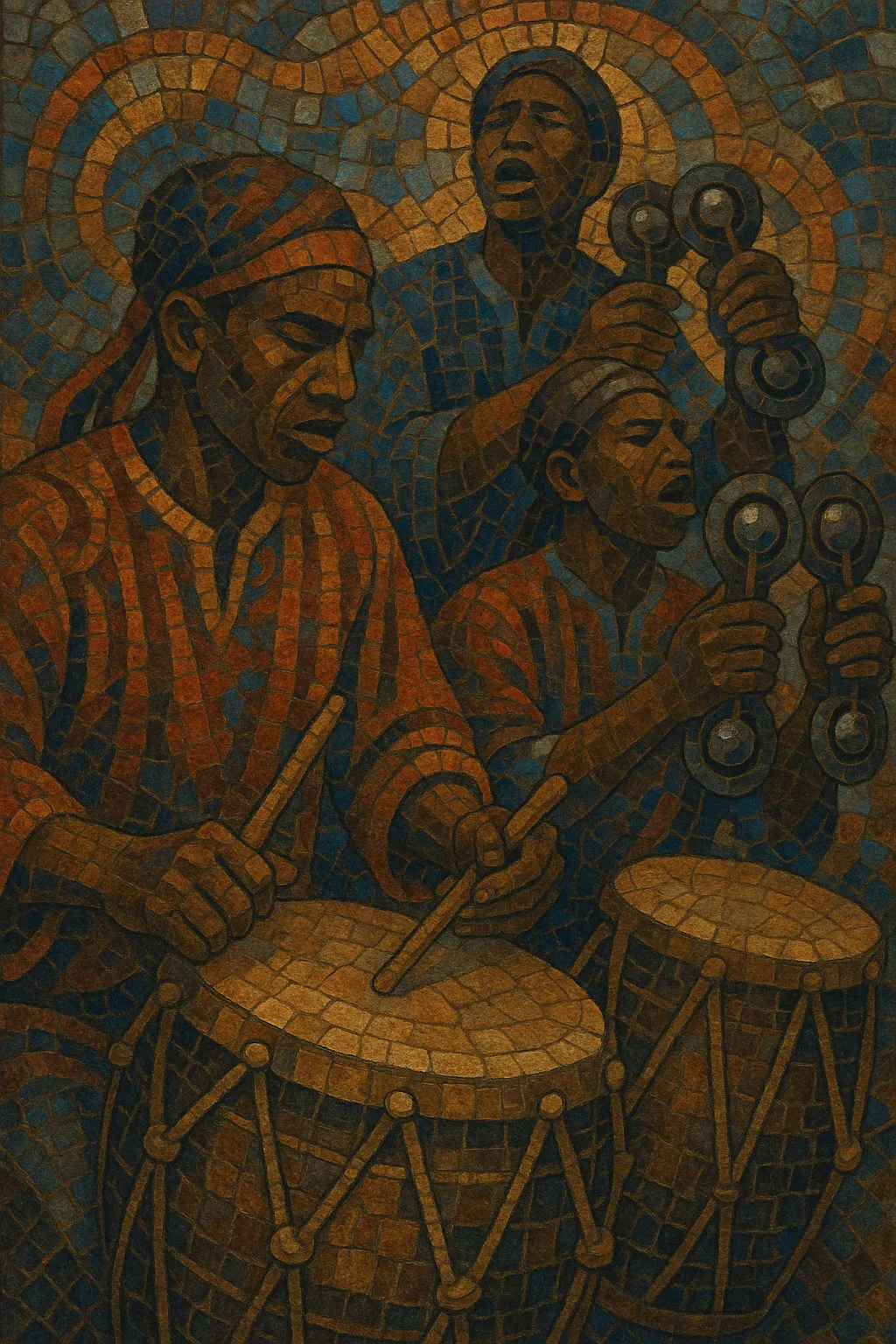
It features a tightly interlocked ensemble of large double-headed drums (tbel) played with sticks, rows of iron castanets (qraqeb/krakebs), and powerful call-and-response vocals. The music typically unfolds in a cyclical 6/8 (or 12/8) feel, using repetition, dynamic swells, and accelerations to lead participants into states of collective ecstasy and communal cohesion.
While primarily ceremonial and community-based rather than commercial, Banga’s sonic language sits alongside Maghrebi trance traditions, sharing kinship with Gnawa and other North African Black diasporic rites.
History
Banga is rooted in the history of Black communities on Djerba (Tunisia), many of whom descend from sub‑Saharan Africans brought to North Africa via trans‑Saharan routes. By the 1800s, processional rites dedicated to local saints—most famously Sidi Marzûq—had crystallized into distinct musical practices combining deep drum ostinatos, metallic percussion, and responsorial chant.
From the outset, Banga functioned as a communal rite rather than stage entertainment. Drumming patterns in 6/8 and 12/8, dense layers of qraqeb, and antiphonal singing create a prolonged groove designed to synchronize bodies and breath. The procession moves through neighborhoods, gathering participants en route, and culminates at a shrine or focal space where the most intense passages occur.
Across the 20th century, Banga remained a local ceremonial tradition transmitted orally, with leaders (often elders) teaching parts, signals, and repertoire. In recent decades, documentation by cultural associations and festivals has brought greater visibility to Banga beyond Djerba, yet practitioners emphasize its ritual purpose and community ownership. Today, Banga performances appear at religious celebrations, heritage events, and cultural showcases, preserving the core trance aesthetics while adapting to contemporary contexts.