Your digging level
Description
Australian children's music is a family-focused genre that blends sing‑along pop, folk, and light rock with educational and participatory lyrics. Songs are designed to be memorable and movement‑friendly, using strong hooks, call‑and‑response, and clear storytelling so young listeners can join in.
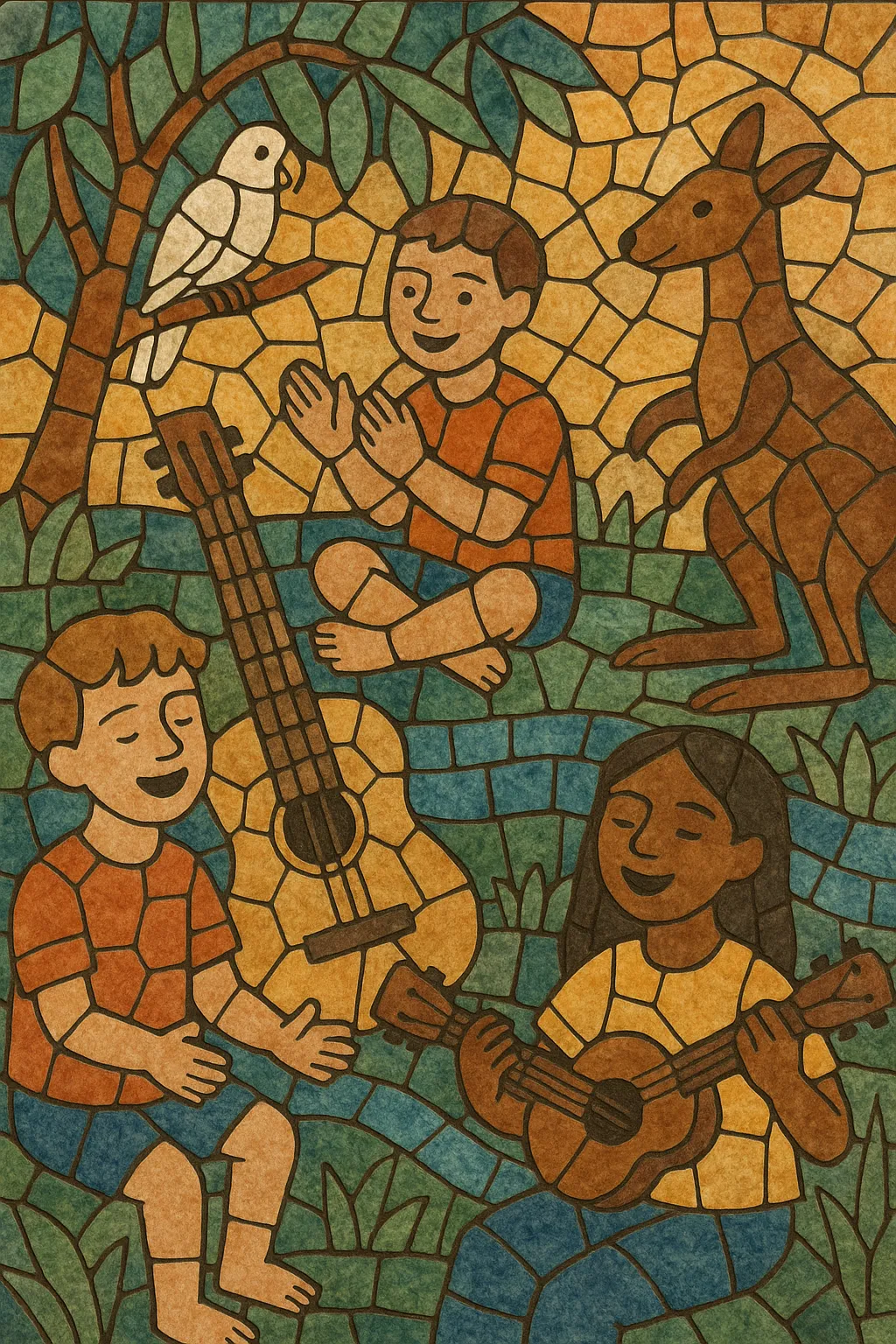
Typical arrangements favor bright acoustic instruments (guitar, ukulele, piano), hand percussion, and clean band sounds, often with group vocals and actions built into the performance. Lyrical themes revolve around everyday experiences, animals, counting, letters, feelings, and Australian places and culture, with an increasing emphasis on inclusion and First Nations representation.
The style is as much about delivery as composition: performers engage directly with children, inviting claps, gestures, and answers. Studio productions keep vocals upfront, intelligible, and dynamic, so the learning goals and fun are equally clear.
History
Australian children's music coalesced alongside public broadcasting and school music programs. ABC Radio and the long‑running TV series Play School (launched in 1966) encouraged simple, participatory songs rooted in folk and nursery traditions. Performers such as Patsy Biscoe and Don Spencer popularized clear‑sung, educational repertoire that families could sing at home.
The 1980s saw children’s music take on pop production values. Peter Combe achieved national success with albums and concerts, proving that kid‑centric songwriting could cross over into the broader music market while retaining educational aims and strong audience participation.
In 1991, The Wiggles—formed by early‑childhood educators—blended rock ’n’ roll, doo‑wop, folk, and action songs into a brightly costumed stage show, becoming a global standard‑bearer. TV groups like Hi‑5 (late 1990s) added dance‑pop, choreography, and character‑driven segments, while acts such as The Hooley Dooleys reached preschoolers through touring and broadcast.
DVDs, ABC Kids releases, and national touring circuits expanded the scene. Collaborations (e.g., Christine Anu and The Wiggles on “Taba Naba”) highlighted Torres Strait Islander and Aboriginal languages and stories, broadening cultural representation. Production values rose, but songs remained concise, interactive, and curriculum‑friendly.
YouTube and streaming reshaped discovery and audience engagement. Artists including Justine Clarke, Lah‑Lah’s Big Live Band, The Fairies, and Teeny Tiny Stevies brought folk‑pop, jazz, and indie flavors to classrooms and theatres. Alumni‑led projects (e.g., Emma Watkins’ Emma Memma) emphasized Auslan and inclusive movement. Contemporary soundtracks and family media further normalized high‑quality, family‑first music, while creators continued to foreground Australian animals, landscapes, and diverse cultures.