
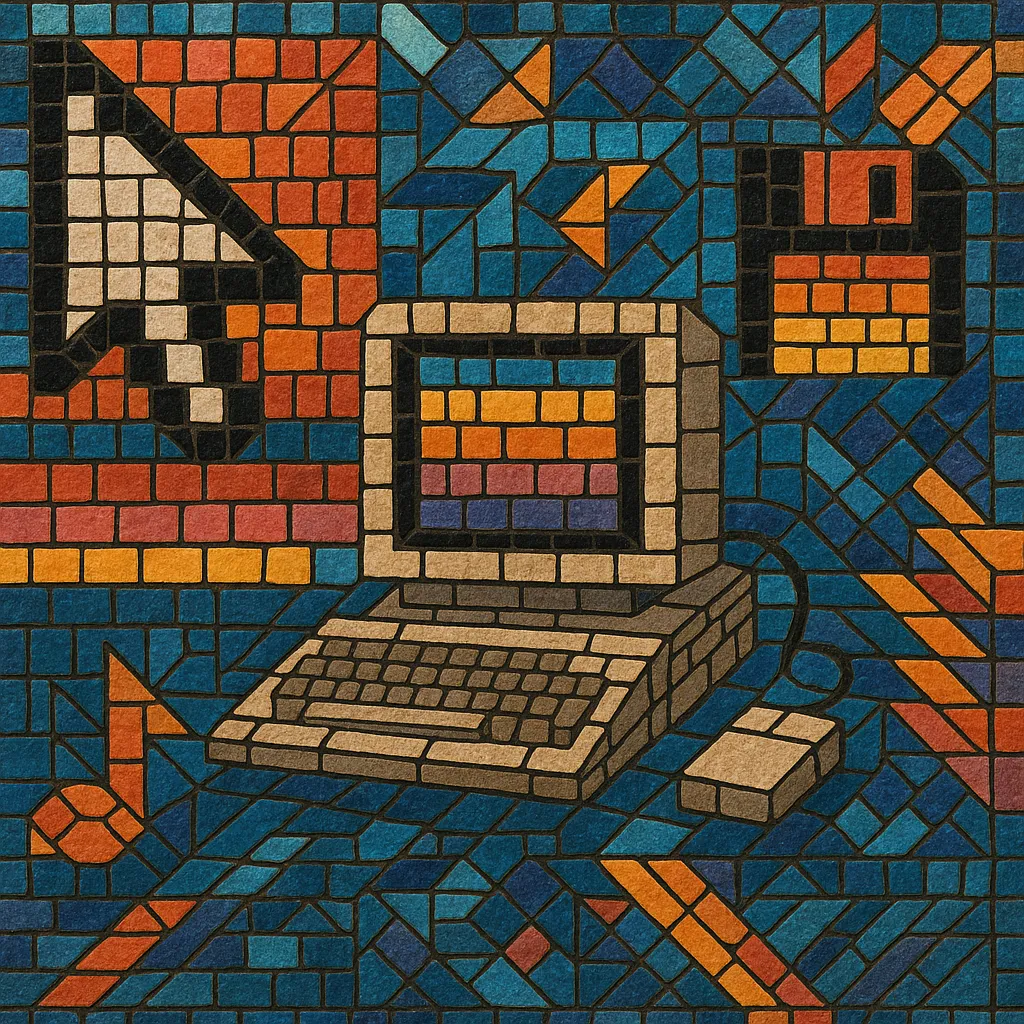
Amigacore is a chiptune-adjacent, breakbeat-driven microgenre built around the unmistakable sound of the Commodore Amiga’s Paula audio chip and classic tracker workflows. It fuses the crunchy, 8-bit/low-sample-rate timbre of MOD-based music with the energy of early rave, jungle, and hardcore techno.
Producers typically compose in trackers such as ProTracker or OctaMED, slicing amen breaks into 8-bit mono samples, sequencing staccato rave stabs, and using rapid effect commands (arpeggios, pitch slides, vibrato) to create chord illusions and hyperactive fills. The result is a nostalgic yet aggressive sound: lo-fi breaks, detuned stabs, gabber-weight kicks, and tight sample edits that celebrate demoscene ingenuity and early-’90s rave futurism.
Amigacore’s foundations lie in the Amiga demoscene and tracker culture, where composers used tools like Soundtracker, ProTracker, and OctaMED to write 4-channel MODs with 8-bit PCM samples. While the term “amigacore” appeared later, the core aesthetics—lo-fi samples, pattern-based sequencing, and creative effect-command tricks—were established by demoscene musicians and early Amiga game/audio composers.
As rave, breakbeat hardcore, jungle, and gabber exploded in Europe, Amiga users began applying those dancefloor vocabularies inside trackers: slicing amen breaks into tiny 8-bit fragments, layering pitched-up breaks, and deploying rave stabs and hoover-style tones from the ST-xx sample disks. This created a harder, faster branch of tracker music with a distinctly Amiga grit—what later came to be identified as “amigacore.”
With the rise of netlabels, forums, and module archives, amigacore circulated widely online. Producers shared MODs, sample packs, and ProTracker-ready breaks, while newer trackers and emulations preserved the sound of the Paula chip. The style remained underground but developed a loyal niche following across the chiptune, breakcore, and demoscene communities.
A wave of retro-minded producers revived Amiga workflows, sometimes using real Amiga 500/1200 hardware for authenticity. “Amiga jungle” videos and releases highlighted the technique-heavy craft behind 8-bit amen chopping. Amigacore’s aesthetics also bled into hyperactive microgenres (e.g., lolicore) and online rave culture, where lo-fi breaks and tracker artifacts are embraced as a creative choice rather than a limitation.