Your digging level
Description
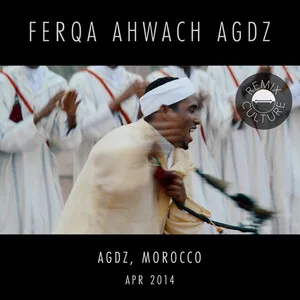
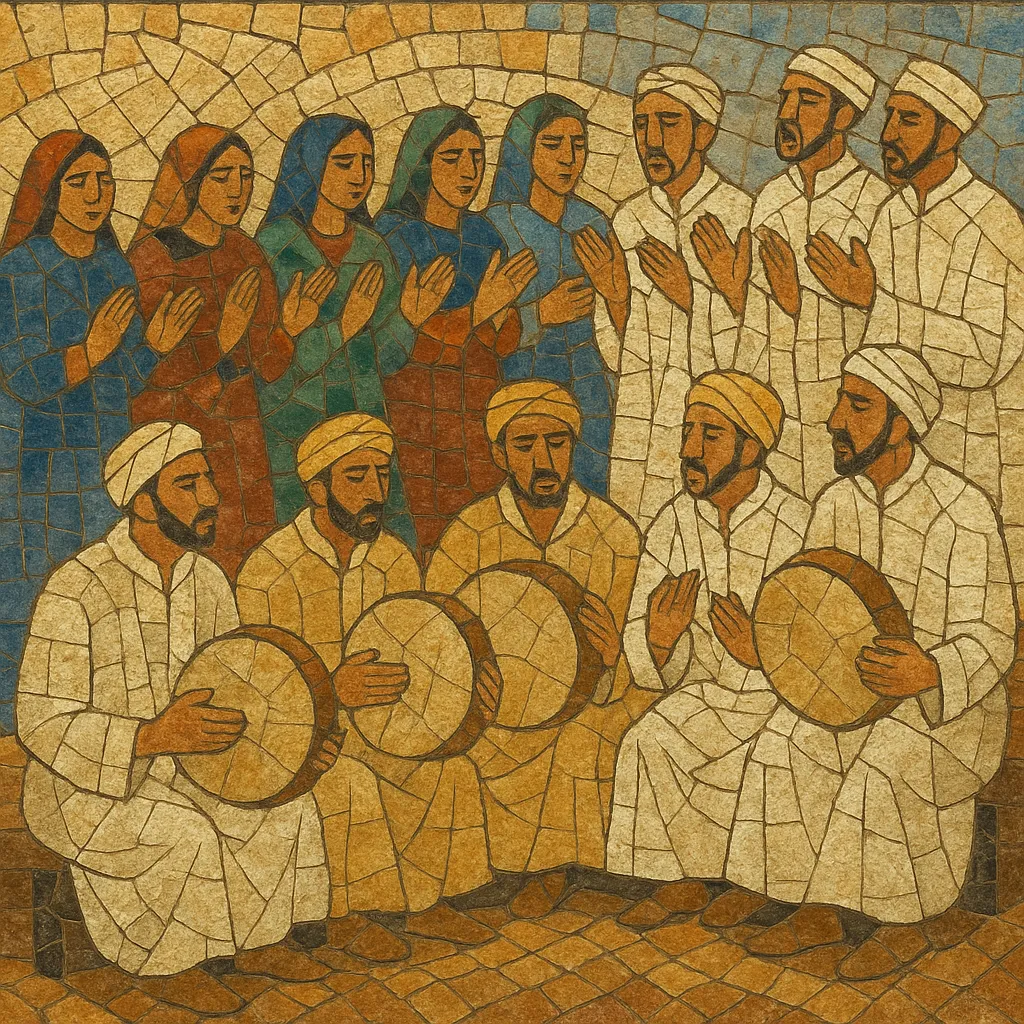
Ahwash (also spelled Ahouach/Ahwach) is a communal Amazigh (Berber) song-and-dance tradition from southern Morocco, especially the Tachelhit-speaking High Atlas and Souss–Massa regions. It brings together large mixed-gender ensembles who perform antiphonal singing, poetry, and synchronized dance accompanied by handclaps and deep frame drums.
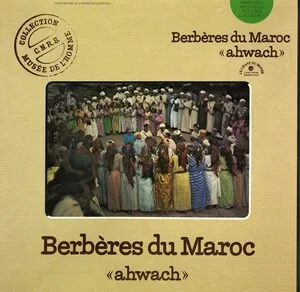
Performances typically form two facing rows or a broad circle, creating powerful call-and-response textures between groups of men and women. The music emphasizes unison chant, tight rhythmic interlocking on bendir/tbel frame drums, and cyclical refrains, often supporting improvised or semi-improvised poetic lines (amarg). Ahwash is central to village festivals (moussems), weddings, and communal celebrations, reinforcing social bonds and collective identity through shared rhythm, movement, and verse.
History
Ahwash is rooted in the communal arts of Amazigh (Berber) peoples of the High Atlas and Souss–Massa, where poetry, dance, and percussion served social, ceremonial, and seasonal functions. Its emphasis on collective participation, antiphony, and dance suggests deep pre-modern origins that likely coalesced into a recognizable form by the 1700s in rural villages.
Traditionally staged during moussems (saint-day fairs), harvest feasts, and weddings, Ahwash assembles large ensembles arranged in facing rows or a circle. A lead poet prompts verses while the ensemble sustains interlocking rhythms on large frame drums (bendir/tbel) and handclaps. The choreography features synchronized steps, shoulder movements, and call-and-response passages that build intensity. Lyrics, delivered in Tachelhit, range from praise and love to local history and moral themes.
With the rise of radio, cultural festivals, and urban migration, Ahwash traveled beyond village settings to regional and national stages. Cultural policy and heritage festivals in cities like Agadir and Ouarzazate helped document and promote local troupes, while contemporary Amazigh performers adapted Ahwash rhythms and refrains in staged presentations. Recordings and audiovisual media further increased visibility, and selective elements—especially the driving frame-drum grooves and refrains—began informing Moroccan popular and world-fusion contexts.
Ahwash remains a living emblem of Amazigh identity, prized for its participatory ethos and the poetic craft (amarg). It functions as collective memory, social glue, and artistic expression, linking communities through rhythm, language, and shared performance.

%2C%20Cover%20art.webp)