Your digging level
Description
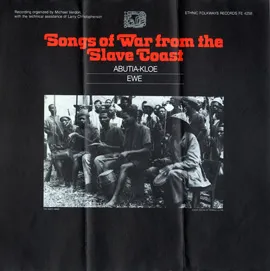
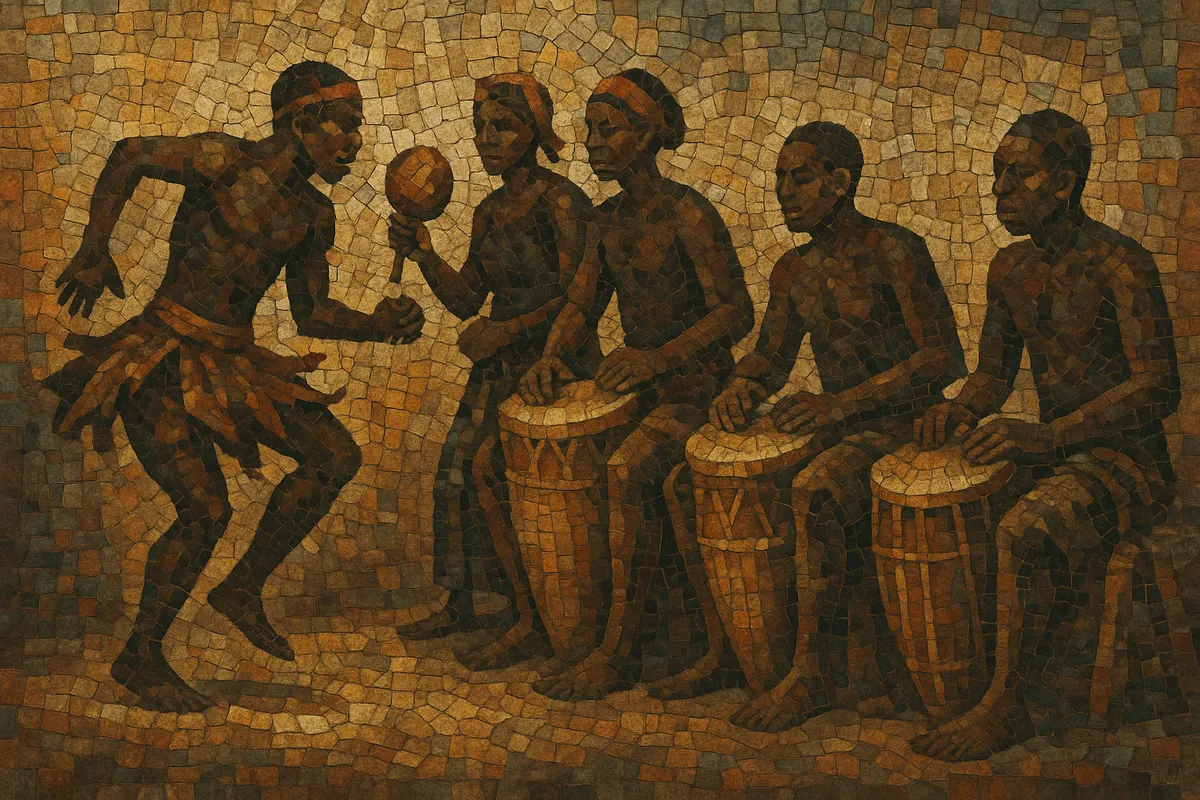
Agbekor is a traditional Ewe war-dance-and-music suite from the southeastern coastal region of West Africa, especially among the Anlo-Ewe of present-day Ghana and Togo. Performed by an interlocking drum ensemble, double bell (gankogui), and gourd rattle (axatse) with call-and-response singing, it dramatizes bravery, unity, and communal memory.
The music is polyrhythmic and typically cycles in a 12/8 feel, layering cross-rhythms around a bell timeline that anchors the ensemble. Core drums include the atsimevu (lead/master drum), sogo, kidi, and kagan, each playing distinct ostinati and dialogues. Dancers execute vigorous, codified movements derived from martial gestures, often in sections (atsiawo) that alternate displays from different subgroups. Though once tied to wartime preparation and remembrance, Agbekor today serves as a ceremonial, educational, and staged heritage genre—also known in some communities as atsiagbekor.
History
Agbekor emerged among the Ewe people as a ritualized musical-dance complex associated with warfare—preparation, valorization of warriors, and communal remembrance. Its structures, songs, and choreographies encode oral history, proverbs, and ethics of courage and cohesion. The master drummer’s cues coordinate sectional changes and signal specific dance figures.
During the colonial period, public performance of martial traditions was sometimes constrained, but Agbekor persisted in community contexts. In the mid-20th century, as Ghana approached and achieved independence (1957), national arts bodies and university ensembles began to curate and stage Agbekor, presenting it as a symbol of cultural identity. This process maintained traditional elements while adapting staging and pedagogy for proscenium settings.
From the late 20th century onward, Ewe master drummers and scholars transmitted Agbekor internationally through workshops, academic programs, and touring ensembles. Ethnomusicological documentation—transcriptions of bell timelines, drum parts, song texts, and dance vocabularies—supported both preservation and pedagogy. Today, Agbekor is a cornerstone of West African drumming curricula worldwide, sustaining community practice at home while thriving in global educational and performance circuits.