Your digging level

For this genre
0/8
🏆
Sign in, then listen to this genre to level up

Description

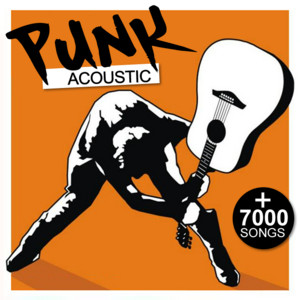
Acoustic punk is a stripped‑down, unplugged expression of punk attitude and songwriting. It keeps punk’s fast tempos, direct lyrics, and DIY ethos, but performs them on primarily acoustic instruments—most often steel‑string guitar, voice, and minimal percussion.

Rather than smoothing punk’s edges, acoustic punk often emphasizes rawness: percussive down‑strokes, shouted or chest‑voice singing, gang vocals, and foot‑stomp/clap rhythms that translate well to house shows, busking spots, and intimate venues. Lyrically it spans political protest, working‑class storytelling, confessional themes, and dark humor.

Compared with folk‑punk, acoustic punk tends to strip away overt folk ornamentation and traditional instrumentation, keeping the core “punk song” intact while simply removing the amplifier.


Sources: Spotify, Wikipedia, Discogs, RYM, MB, user feedback and other online sources

History

Origins (1980s)
•   Acoustic punk’s roots lie in the early 1980s, when artists carried punk energy into unplugged formats. Violent Femmes’ debut (1983) showcased acoustic instrumentation with punk urgency, while UK artist Billy Bragg delivered agit‑folk anthems with unmistakably punk bite. •   Coffeehouse circuits, street busking, and house parties provided natural spaces for punk songcraft without amps, reinforcing a DIY, low‑cost, portable performance model.
1990s: Unplugged culture and punk crossover
•   The wider “unplugged” moment of the early 1990s normalized acoustic sets across rock and punk. Many punk bands experimented with acoustic tours, B‑sides, and in‑store performances, strengthening a pipeline from hardcore/DIY scenes to singer‑songwriter delivery. •   Parallel scenes—anti‑folk in New York and folk‑punk in the US/UK—cultivated confessional, satirical, and political songwriting that bled into acoustic punk aesthetics.
2000s: DIY revival and house‑show networks
•   A major US wave crystalized through labels and collectives (e.g., Plan‑It‑X) and touring circuits of basements, living rooms, and punk houses. Early Against Me! recordings, Defiance, Ohio, Mischief Brew, and AJJ (Andrew Jackson Jihad) turned blistering punk into acoustic shout‑alongs. •   The Revival Tour (spearheaded by Chuck Ragan) gathered punk and hardcore veterans for collaborative acoustic shows, further legitimizing the idiom across scenes.
2010s–2020s: From basements to timelines
•   Artists like Frank Turner brought acoustic punk’s ethos to festival stages, while Pat the Bunny–related projects (Wingnut Dishwashers Union, Ramshackle Glory) became touchstones for politically charged, intensely personal songs. •   Bandcamp, YouTube, and later TikTok enabled solo punk songwriters to circulate lo‑fi acoustic tracks globally, maintaining the tradition of small‑scale recording and direct listener connection. The style remains a live, participatory phenomenon—handclaps, sing‑backs, and communal catharsis—thriving in both DIY and mainstream settings.

How to make a track in this genre

Core instrumentation and feel
•   Start with a steel‑string acoustic guitar; add voice, hand percussion (shaker, tambourine, cajón), and body/foot stomps. Upright or acoustic bass and a second guitar or mandolin can fill out the mid‑range. •   Keep the performance physical: strong down‑strokes, palm‑muted accents, and percussive strums that mimic a punk rhythm guitar. Aim for brisk tempos (≈ 160–220 BPM) and a driving two‑beat feel (kick on 1, snare/hand‑hit on 2).
Harmony and melody
•   Use punchy, simple progressions (I–IV–V, vi–IV–I–V, I–V–vi–IV). Minor‑key or modal mixture can darken the tone for protest or confessional songs. •   Capo freely to fit the singer’s range; double‑track vocals or add gang shouts for choruses.
Lyrics and delivery
•   Be direct and concrete: political critique, working‑class life, mental health, relationships, and gallows humor all fit. Short lines, internal rhyme, and memorable hooks help audience sing‑backs. •   Performance is half the song: belt from the chest, lean into rhythmic diction, and welcome call‑and‑response.
Song structures and arrangement
•   Keep songs tight (≈ 2–3 minutes). Common forms: verse–chorus–verse–chorus–bridge–chorus or verse–refrain patterns. •   Use dynamic drops (e.g., voice + guitar only) to set up full‑throttle choruses with claps, foot‑stomps, and harmonies.
Recording and stage practice
•   Embrace lo‑fi: dynamic mic close to voice, a single condenser for room, and minimal editing. Slight saturation preserves energy. •   On stage (or in a living room), prioritize connection: eye contact, humor, quick segues, and teach‑the‑chorus moments reinforce the communal, DIY spirit.

Top tracks

Locked
Share your favorite track to unlock other users’ top tracks

Upcoming concerts

in this genre
Influenced by
Has influenced

Download our mobile app

Get the Melodigging app and start digging for new genres on the go
© 2026 Melodigging
Melodding was created as a tribute to Every Noise at Once, which inspired us to help curious minds keep digging into music's ever-evolving genres.
Buy me a coffee for Melodigging