Your digging level
Description
Acid trance is a European strain of trance that fuses trance’s long-form builds and euphoric breakdowns with the “acid” sound—squelching, resonant, 303-driven basslines manipulated in real time.
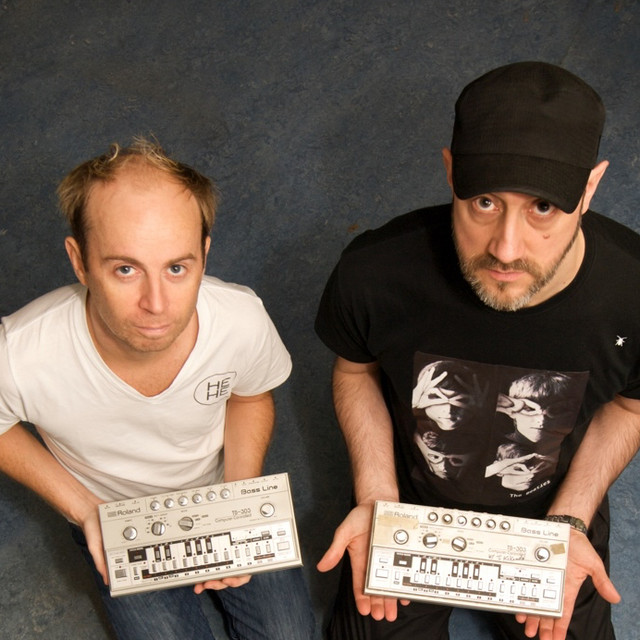
Its signature timbre comes from the Roland TB-303 (or faithful emulations and clones), whose cutoff, resonance, envelope mod, accent, and slide are automated or performed live to create elastic, bubbling sequences. These lines are set against 4/4 club rhythms at roughly 130–145 BPM, with airy pads, trance arpeggios, and big-room breakdowns that emphasize tension and release.
The style became particularly identified with Belgium, where it was heavily showcased at early raves and on labels that pushed a harder, more hypnotic direction within the broader trance movement.
History
Acid trance arose as trance took shape in continental Europe and the UK, with producers borrowing the squelching TB-303 techniques developed in acid house. Artists began integrating those animated, resonant basslines into trance’s longer arrangements and atmospheric breakdowns, yielding a sound that felt both hypnotic and euphoric.
Belgium became a focal point. Acid trance was prominently showcased at Antwerp Rave 24 and quickly proved popular in the national scene, eventually producing several Belgian number-one singles. Clubs and imprints connected to the country’s rave infrastructure (e.g., Bonzai Records and related labels) helped define a harder, more insistent acid-infused trance that spread across Europe.
In parallel, German and UK producers refined the sound on techno- and trance-oriented labels in Frankfurt, Berlin, and London. The TB-303’s real-time parameter tweaks—filter cutoff sweeps, high resonance peaks, accents, and slides—were combined with trance’s ascending melodies, long snare-roll builds, and DJ-friendly intros/outros. Records from these hubs circulated widely in the early-to-mid 1990s, cementing acid trance as a distinct substyle.
By the mid-to-late 1990s the style had international traction in clubs and festivals. Even as other trance variants (progressive, uplifting, hard trance, and later psytrance) rose, the acid-trance toolkit—especially the expressive 303 line—remained foundational. Modern revivals and software emulations keep the sound current, while its influence persists in hard trance, psy/Goa scenes, and contemporary neo-/classic-trance revivals.