Genres
Artists
Albums
Make Music
Sign in
Sign in
Albums
By Paul McCartney
Albums
By Paul McCartney
Working Classical
October 14, 1999
Listen
Genres
Rock
Rock is a broad family of popular music centered on amplified instruments, a strong backbeat, and song forms that foreground riffs, choruses, and anthemic hooks. Emerging from mid‑20th‑century American styles like rhythm & blues, country, and gospel-inflected rock and roll, rock quickly expanded in scope—absorbing folk, blues, and psychedelic ideas—while shaping global youth culture. Core sonic markers include electric guitar (often overdriven), electric bass, drum kit emphasizing beats 2 and 4, and emotive lead vocals. Rock songs commonly use verse–chorus structures, blues-derived harmony, and memorable melodic motifs, ranging from intimate ballads to high‑energy, stadium‑sized performances.
Discover
Listen
Classical
Classical music is the notated art-music tradition of Europe and its global descendants, characterized by durable forms, carefully codified harmony and counterpoint, and a literate score-based practice. The term “classical” can refer broadly to the entire Western art-music lineage from the Medieval era to today, not just the Classical period (c. 1750s–1820s). It privileges long-form structures (such as symphonies, sonatas, concertos, masses, and operas), functional or modal harmony, thematic development, and timbral nuance across ensembles ranging from solo instruments to full orchestras and choirs. Across centuries, the style evolved from chant and modal polyphony to tonal harmony, and later to post-tonal idioms, while maintaining a shared emphasis on written notation, performance practice, and craft.
Discover
Listen
Western Classical
Western classical is the notated art-music tradition that developed in Europe from medieval Christian chant into the large-scale secular and sacred forms of the Baroque, Classical, Romantic, and modern eras. It is characterized by staff notation, evolving systems of modality and tonality, and forms such as symphony, sonata, concerto, mass, opera, and chamber music. Across its history, Western classical established an extensive theory of harmony and counterpoint, refined orchestration across strings, winds, brass, and percussion, and cultivated performance practices from a cappella chant to full symphonic and operatic forces. Its repertoire, pedagogy, and institutions (conservatories, orchestras, opera houses) made it a global reference point for compositional craft and instrumental technique.
Discover
Listen
Similar albums
2010
The Ascension
Glenn Branca
2010
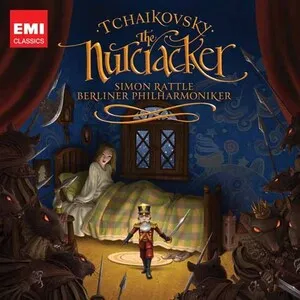
The Nutcracker
Pyotr Tchaikovsky Пётр Чайковский / Berliner Philharmoniker / Simon Rattle
1981
The Goldberg Variations
Johann Sebastian Bach / Glenn Gould
2002
Treasure Planet
John Rzeznik
1984
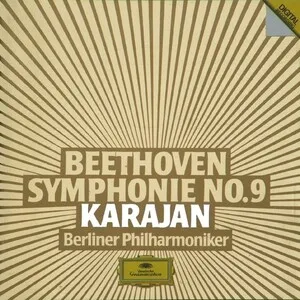
Symphonie No.9
Ludwig van Beethoven / Berliner Philharmoniker / Herbert von Karajan
1985
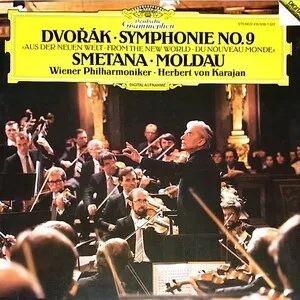
Symphonie No. 9 »Aus der neuen Welt« / Moldau
Antonín Dvořák / Bedřich Smetana
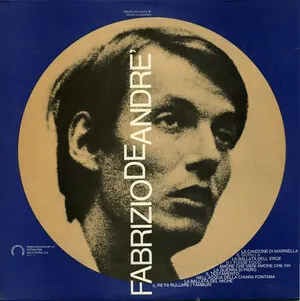
1968
Volume 3
Fabrizio De André
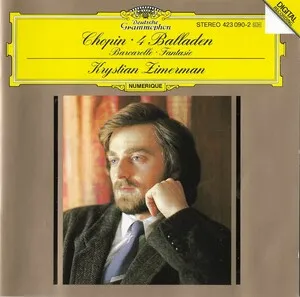
1988
4 Balladen; Barcarolle; Fantasie
Frédéric Chopin / Krystian Zimerman
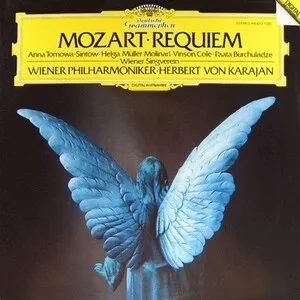
1987
Requiem
Wolfgang Amadeus Mozart / Franz Xaver Süssmayr
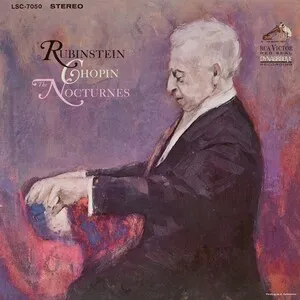
1965
The Nocturnes
Frédéric Chopin / Artur Rubinstein
Download our mobile app
Get the Melodigging app and start digging for new genres on the go
Download on the App Store
Get it on Google Play
© 2026 Melodigging
Give feedback
Legal
Melodding was created as a tribute to
Every Noise at Once
, which inspired us to help curious minds keep digging into music's ever-evolving genres.