Genres
Make Music
Artists
Albums
Challenges
Sign in
Sign in
Albums
Albums
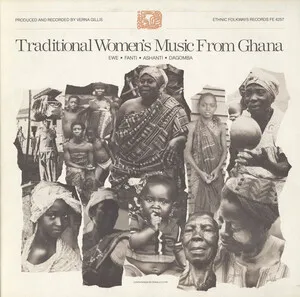
Traditional Women's Music From Ghana: Ewe, Fanti, Ashanti, and Dagomba
January 1, 1981
Listen
1
/5
Genres
Ewe Music
Ewe music is the traditional musical culture of the Eʋe (Ewe) people of southeastern Ghana and southern Togo, known for its intricate polyrhythms, responsorial singing, and integrated dance. At its core is a time-keeping bell pattern (gankogui) and a beaded gourd rattle (axatse), over which a family of drums—most prominently the atsimevu (lead drum), sogo, kidi, and kagan—interlock in cross-rhythms. A master drummer shapes the form, signaling entrances, breaks, and dance cues with improvisatory phrases. Songs are typically in the Eʋegbe language and use call-and-response textures, with choruses supporting a lead singer. Repertoires such as Agbadza (a social dance with roots in war music), Atsiagbekor (a virtuosic former war dance), Gahu (a lively social dance), Kinka, and Gota are performed at festivals, funerals, initiations, and communal celebrations. The music is inseparable from dance and social meaning: rhythm, song, and movement form a single art that encodes history, morality, and community identity.
Discover
Listen
Akan Music
Akan music refers to the traditional and contemporary musical practices of the Akan peoples of Ghana (and adjacent areas of Côte d’Ivoire). It centers on polyrhythmic percussion, call-and-response vocals, drum speech, and dance, and it functions as an integral part of social life—marking royal occasions, funerals, festivals, and community recreation. Core ensembles feature interlocking drum parts coordinated by a bell timeline and rattles, with lead and responsorial singing in Twi or Fante. Court and ceremonial genres such as kete and fontomfrom highlight royal prestige and drum language on atumpan (talking drums), while community forms like adowa (a women-led funeral/recreational music-dance) and nnwomkro (recreational chorus singing) emphasize social cohesion. String timbres from the seprewa (Akan harp-lute) and occasional ivory/metal horns add melodic color. Over time, Akan musical aesthetics—especially 12/8 bell patterns, cross-rhythms, proverbial lyricism, and tonal speech rhythms—shaped modern Ghanaian styles, influencing palm-wine guitar music, dance-band and guitar-band highlife, and later hiplife and azonto.
Discover
Listen
Dagomba Music
Dagomba music is the traditional music of the Dagbamba (Dagomba) people of northern Ghana. It centers on a sophisticated court-and-community drumming culture performed by hereditary drummer-historians known as lunsi. Its core instruments are the hourglass tension "talking drum" (lunga/lunna) and the cylindrical bass drum (gung-gong/gungon), often supported by iron bells and rattles, voice, and occasionally the one-string fiddle (gonje). The lead talking drum "speaks" praise names and historical texts in the tones and rhythms of the Dagbani language, guiding dancers and the ensemble. Rhythmically, Dagomba music is polyrhythmic and cyclical, moving between 12/8 and 4/4 feels with dense cross-rhythms, off-beat phrasing, and cue-based breaks. It accompanies important social and ritual events—chiefly festivals (e.g., Damba), processions, royal ceremonies, and popular dances such as Baamaaya and Takai—where music, history, and dance are inseparable.
Discover
Listen
Similar albums
1995
Okaman
Monique Séka
1992
200% zoblazo
Meiway
1989
Missounwa
Monique Séka
1997
Adéba
Monique Séka
2025
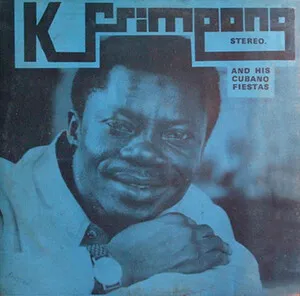
K. Frimpong and His Cubano Fiestas
K. Frimpong & His Cubano Fiestas
2023
Bark Out Thunder Roar Out Lightning
Chief Adjuah
2023
Off the Grid
Onipa
1976
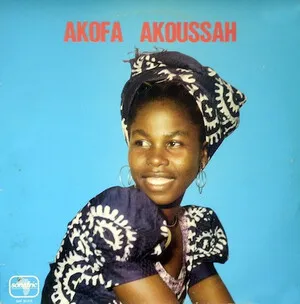
Akofa Akoussah
Akofa Akoussah
2000
La confirmation
Le Zagazougou
2020
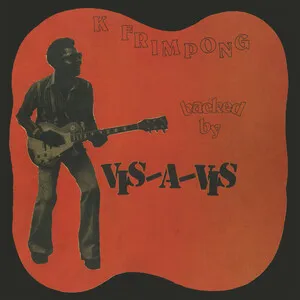
K. Frimpong Backed by Vis-a-Vis
Alhaji K. Frimpong & Vis-A-Vis
Download our mobile app
Get the Melodigging app and start digging for new genres on the go
Download on the App Store
Get it on Google Play
© 2026 Melodigging
Give feedback
Legal
Melodding was created as a tribute to
Every Noise at Once
, which inspired us to help curious minds keep digging into music's ever-evolving genres.