Genres
Make Music
Artists
Albums
Challenges
Sign in
Sign in
Albums
By Friedrich Cerha
Albums
By Friedrich Cerha
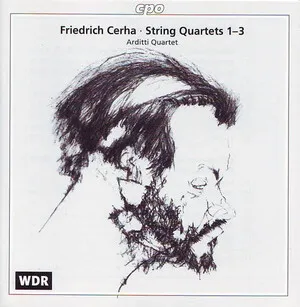
String Quartets 1-3
July 20, 1999
Listen
1
/5
Genres
Serialism
Serialism is a compositional method in which musical parameters are organized into ordered series that govern a work’s structure. Most famously, twelve‑tone serialism uses an ordered row of the 12 pitch classes, deploying transformations such as prime, inversion, retrograde, and retrograde inversion to avoid traditional tonal hierarchy. While Schoenberg’s twelve‑tone technique focuses on pitch, post‑war composers expanded the idea to "total" or "integral" serialism, applying series to rhythm, dynamics, articulation, timbre, and register. The results often emphasize clarity of event over tonal center, pointillistic textures, and rigorous formal control. Aesthetic outcomes range from Berg’s expressive lyricism to Webern’s ultra‑condensed, crystalline writing, and later to the highly systematized post‑war European avant‑garde. Serialism remains a cornerstone of 20th‑century modernist practice, whether embraced, extended, or reacted against by subsequent movements.
Discover
Listen
String Quartet
The string quartet is a cornerstone chamber-music genre scored for two violins, viola, and cello. It typically features a conversational texture where four independent voices share thematic material, balancing melody, harmony, and counterpoint. The classic four‑movement plan (fast sonata‑form, slow movement, minuet/scherzo, and a lively finale) became a hallmark in the Classical era, while later composers expanded and transformed the form, harmony, rhythm, and timbre. From Haydn and Mozart through Beethoven and Schubert to Bartók and Shostakovich, the quartet has served as a laboratory for compositional craft and expressive depth, ranging from intimate lyricism to rigorous structure and avant‑garde experimentation.
Discover
Listen
Classical
Classical music is the notated art-music tradition of Europe and its global descendants, characterized by durable forms, carefully codified harmony and counterpoint, and a literate score-based practice. The term “classical” can refer broadly to the entire Western art-music lineage from the Medieval era to today, not just the Classical period (c. 1750s–1820s). It privileges long-form structures (such as symphonies, sonatas, concertos, masses, and operas), functional or modal harmony, thematic development, and timbral nuance across ensembles ranging from solo instruments to full orchestras and choirs. Across centuries, the style evolved from chant and modal polyphony to tonal harmony, and later to post-tonal idioms, while maintaining a shared emphasis on written notation, performance practice, and craft.
Discover
Listen
Similar albums
2000
The Complete String Trios and Quartets
Anton Webern / Arditti Quartet
2000
Sherlock Holmes (Original TV Soundtrack) [2024 DigiMIX]
Gabrieli String Quartet
1997
The 6 String Quartets
Béla Bartók / Takács Quartet
2014
Complete Works for String Quartet & Trios
Brian Ferneyhough / Arditti Quartet / Claron McFadden
1959
Sonata for Piano, Op. 1 / Three Piano Pieces, Op. 11 / Sonata No. 3 for Piano, Op. 92, No. 4
Alban Berg / Glenn Gould
2009
Arnold Schoenberg 2: Streichquartette I-IV
Arnold Schoenberg / Arditti Quartet / Dawn Upshaw
1962
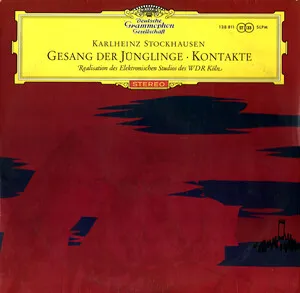
Gesang der Jünglinge; Kontakte
Karlheinz Stockhausen / Studio für elektronische Musik des Westdeutschen Rundfu…
2016
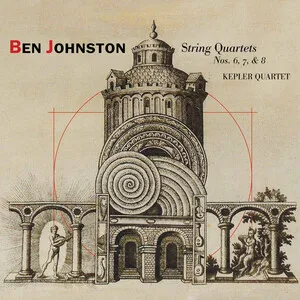
String Quartets Nos. 6, 7, & 8
Ben Johnston / Kepler Quartet
1988
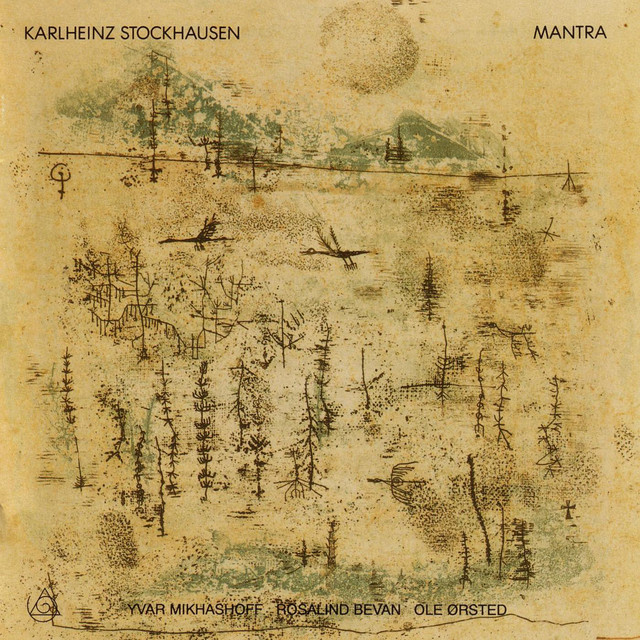
Mantra
Karlheinz Stockhausen
1998
Kronos Quartet Performs Alfred Schnittke: The Complete String Quartets
Alfred Schnittke Альфред Шнитке / Kronos Quartet
Download our mobile app
Get the Melodigging app and start digging for new genres on the go
Download on the App Store
Get it on Google Play
© 2026 Melodigging
Give feedback
Legal
Melodding was created as a tribute to
Every Noise at Once
, which inspired us to help curious minds keep digging into music's ever-evolving genres.