Genres
Make Music
Artists
Albums
Challenges
Sign in
Sign in
Albums
By Alban Berg
Albums
By Alban Berg
Streichquartett Op. 3; Lyrische Suite
December 19, 2016
Listen
1
/5
Genres
Expressionism
Expressionism in music is an early-20th-century modernist movement that foregrounds inner psychological states, anxiety, and alienation through highly charged sonic language. It abandons traditional tonal centers in favor of atonality or extreme chromaticism, embraces dissonance without immediate resolution, and often fragments melody into sharp, angular gestures. Textures favor clarity and intensity: chamber forces, extreme registers, abrupt contrasts of dynamics and timbre, and sparse, aphoristic forms are common. Composers experiment with Sprechstimme (speech-like vocalization), Klangfarbenmelodie (melody distributed across changing timbres), and rapidly shifting meters to intensify expression. Vocal works (monodramas, song cycles) and concise instrumental miniatures became emblematic vehicles for psychological drama.
Discover
Listen
Second Viennese School
The Second Viennese School is an early‑20th‑century circle of Viennese composers led by Arnold Schoenberg, with his pupils Alban Berg and Anton Webern. It marks the decisive move from late‑Romantic chromaticism into atonality and the codification of the twelve‑tone (dodecaphonic) method, reshaping pitch organization, form, and expression in Western art music. Its hallmarks include tight motivic economy, acute attention to timbre (Klangfarbenmelodie), pointillistic textures, extreme dynamics and registral contrasts, and an expressionist intensity that often explores fragmentation and psychological tension. The repertoire spans chamber works, lieder, orchestral pieces, piano music, and operas (notably Berg’s Wozzeck and Lulu). The school’s techniques and aesthetics became a foundational strand of 20th‑century musical modernism.
Discover
Listen
String Quartet
The string quartet is a cornerstone chamber-music genre scored for two violins, viola, and cello. It typically features a conversational texture where four independent voices share thematic material, balancing melody, harmony, and counterpoint. The classic four‑movement plan (fast sonata‑form, slow movement, minuet/scherzo, and a lively finale) became a hallmark in the Classical era, while later composers expanded and transformed the form, harmony, rhythm, and timbre. From Haydn and Mozart through Beethoven and Schubert to Bartók and Shostakovich, the quartet has served as a laboratory for compositional craft and expressive depth, ranging from intimate lyricism to rigorous structure and avant‑garde experimentation.
Discover
Listen
Chamber Music
Chamber music is a tradition of composed music for small ensembles—typically one player per part—intended for intimate spaces such as courts, salons, and private rooms rather than large public halls. Its aesthetic emphasizes clarity of texture, conversational interplay among parts, and balance without a conductor. Hallmark formations include the string quartet, piano trio, wind quintet, string quintet, and various mixed ensembles. Multi‑movement cycles (often in sonata form) and finely wrought counterpoint are common, ranging from Baroque trio sonatas to Classical string quartets and modern works with expanded timbres and techniques. Because of its scale and transparency, chamber music has long been a proving ground for compositional craft and ensemble musicianship, shaping the core of Western art music from the Baroque through the present.
Discover
Listen
Classical
Classical music is the notated art-music tradition of Europe and its global descendants, characterized by durable forms, carefully codified harmony and counterpoint, and a literate score-based practice. The term “classical” can refer broadly to the entire Western art-music lineage from the Medieval era to today, not just the Classical period (c. 1750s–1820s). It privileges long-form structures (such as symphonies, sonatas, concertos, masses, and operas), functional or modal harmony, thematic development, and timbral nuance across ensembles ranging from solo instruments to full orchestras and choirs. Across centuries, the style evolved from chant and modal polyphony to tonal harmony, and later to post-tonal idioms, while maintaining a shared emphasis on written notation, performance practice, and craft.
Discover
Listen
Similar albums
2009
Arnold Schoenberg 2: Streichquartette I-IV
Arnold Schoenberg / Arditti Quartet / Dawn Upshaw
2000
The Complete String Trios and Quartets
Anton Webern / Arditti Quartet
1997
The 6 String Quartets
Béla Bartók / Takács Quartet
2014
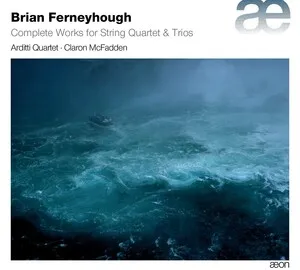
Complete Works for String Quartet & Trios
Brian Ferneyhough / Arditti Quartet / Claron McFadden
1984
Verklärte Nacht; Streichtrio
Arnold Schoenberg
1959
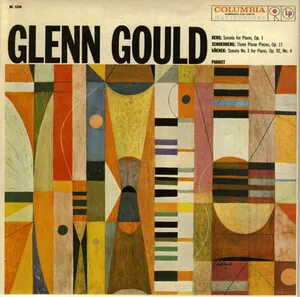
Sonata for Piano, Op. 1 / Three Piano Pieces, Op. 11 / Sonata No. 3 for Piano, Op. 92, No. 4
Alban Berg / Glenn Gould
1971
Complete Music for String Quartet
Anton Webern / Quartetto Italiano
1971
Neue Wiener Schule: Die Streichquartette
Arnold Schoenberg / LaSalle Quartett
2012
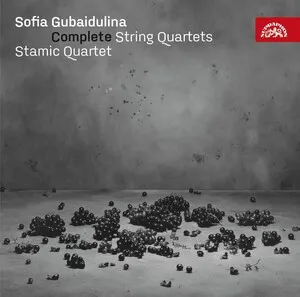
Complete String Quartets
Sofia Gubaidulina София Губайдулина / Stamic Quartet
2002
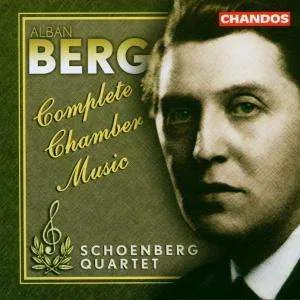
Complete Chamber Music
Alban Berg / Schoenberg Quartet
Download our mobile app
Get the Melodigging app and start digging for new genres on the go
Download on the App Store
Get it on Google Play
© 2026 Melodigging
Give feedback
Legal
Melodding was created as a tribute to
Every Noise at Once
, which inspired us to help curious minds keep digging into music's ever-evolving genres.