Genres
Make Music
Artists
Albums
Challenges
Sign in
Sign in
Albums
By Don Ellis
Albums
By Don Ellis
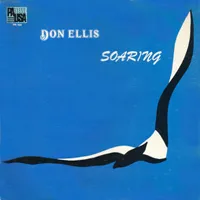
Soaring
May 25, 1973
Listen
2
/5
Genres
Post-Bop
Post-bop is a modern jazz style that emerged in the early-to-mid 1960s as a synthesis of bebop, hard bop, modal jazz, cool jazz, third stream ideas, and the experimental impulses of the avant‑garde. It typically features acoustic small ensembles (often trumpet, saxophone, piano, bass, and drums) interacting with highly flexible time, non-functional or modal harmony, and motivic development rather than relying strictly on bebop chord cycles. Its sound balances structure and freedom: forms are clearly composed and often intricate, but improvisers stretch time feels, reharmonize on the fly, and use advanced harmonic colors such as quartal voicings, pedal points, and chromatic planing. Canonical touchstones include Miles Davis’s mid‑’60s Second Great Quintet (e.g., E.S.P., Nefertiti), Wayne Shorter’s Speak No Evil, Herbie Hancock’s Maiden Voyage, Andrew Hill’s Point of Departure, and many mid‑’60s Blue Note recordings that pushed beyond hard bop.
Discover
Listen
Experimental Big Band
Experimental big band is a forward-looking offshoot of the jazz big band tradition that applies avant‑garde composition, free improvisation, and nonstandard orchestrations to the classic large‑ensemble format. While it often retains a core lineup of saxophones, trumpets, trombones, and rhythm section, it commonly expands the palette with woodwind doublings, strings, electronics, unconventional percussion, and voice. Harmony ranges from extended tonal and modal writing to polytonality and atonality, often employing quartal/quintal harmony, tone clusters, and timbral (color‑based) harmonies. Rhythm favors odd meters, polyrhythms, metric modulation, and groove/texture hybrids. Forms may be through‑composed, modular, or suite‑like, and pieces frequently integrate conducted or cued improvisation, graphic notation, and other experimental score practices. Rather than a single codified style, experimental big band functions as an umbrella for large ensembles that push beyond swing and post‑bop arranging by drawing on contemporary classical approaches, free jazz, minimalism, electronics, and global traditions.
Discover
Listen
Progressive Big Band
Progressive big band is a post–World War II evolution of big band jazz that shifts the focus from dance music to concert-oriented, highly arranged works. It preserves the massed brass-and-reeds power of swing-era ensembles, but adopts bebop’s advanced harmony and lines, classical orchestration techniques, and ambitious, often through-composed forms. Arrangers favored expanded instrumentation (French horns, tuba, Latin percussion, sometimes strings), dense voicings, polytonality, and dramatic dynamic contrasts, yielding a bold, modernist “concert jazz” sound. Compared with swing, the rhythm can alternate between a hard-driving 4/4, even-eighth feels, Latin grooves, and unusual meters, while sections trade contrapuntal lines more than riff-based call-and-response. The result is an epic, sometimes imposing aesthetic that bridged jazz and contemporary classical ideas.
Discover
Listen
Big Band
Big band is a large-ensemble style of jazz and popular dance music built around brass, reed, and rhythm sections playing arranged parts. Typical instrumentation includes five saxophones (often doubling clarinet/flute), four trombones, four trumpets, and a rhythm section of piano, guitar, upright bass, and drum set. The music emphasizes swing rhythms, call-and-response between sections, riff-based writing, and dramatic shout choruses, while leaving space for improvised solos. Born in American ballrooms and theaters, big band became the sound of the Swing Era, providing both music for dancing and a platform for sophisticated arranging and orchestration that shaped much of 20th‑century jazz and popular music.
Discover
Listen
Jazz
Jazz is an improvisation-centered music tradition that emerged from African American communities in the early 20th century. It blends blues feeling, ragtime syncopation, European harmonic practice, and brass band instrumentation into a flexible, conversational art. Defining features include swing rhythm (a triplet-based pulse), call-and-response phrasing, blue notes, and extended harmonies built on 7ths, 9ths, 11ths, and 13ths. Jazz is as much a way of making music—spontaneous interaction, variation, and personal sound—as it is a set of forms and tunes. Across its history, jazz has continually hybridized, from New Orleans ensembles and big-band swing to bebop, cool and hard bop, modal and free jazz, fusion, and contemporary cross-genre experiments. Its influence permeates global popular and art music.
Discover
Listen
Similar albums
1971
Music Inc.
Music Inc.
1972
Let My Children Hear Music
Charles Mingus
1983
The Ballad of the Fallen
Charlie Haden
1967
Electric Bath
The Don Ellis Orchestra
2004
Shibuboshi 渋星
Shibusashirazu 渋さ知らズ
2022
Living Sky
Sun Ra Arkestra
1968
Sonny's Dream (Birth of the New Cool)
The Sonny Criss Orchestra
1968
The Jazz Composer's Orchestra
The Jazz Composer's Orchestra
1985
Winged Serpent (Sliding Quadrants)
Cecil Taylor Segments II (Orchestra of Two Continents)
2014
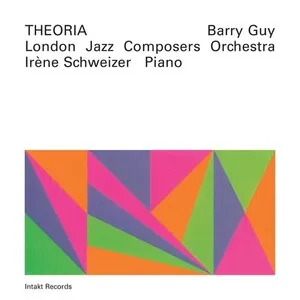
Theoria
Barry Guy, London Jazz Composers' Orchestra & Irène Schweizer
Download our mobile app
Get the Melodigging app and start digging for new genres on the go
Download on the App Store
Get it on Google Play
© 2026 Melodigging
Give feedback
Legal
Melodding was created as a tribute to
Every Noise at Once
, which inspired us to help curious minds keep digging into music's ever-evolving genres.