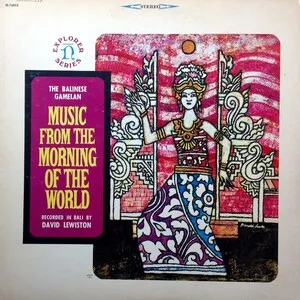
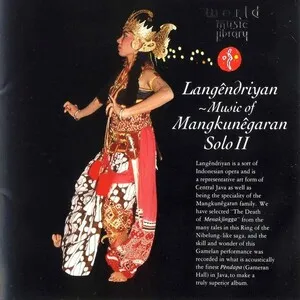
Southeast Asian music is a broad regional umbrella that encompasses the court, temple, folk, and popular traditions of countries such as Indonesia, Thailand, Vietnam, Cambodia, Laos, Myanmar, Malaysia, the Philippines, Brunei, and Timor‑Leste.
Across the region, musical practice favors cyclic forms, interlocking (hocketing) patterns, heterophonic textures, and colotomic structures in which gongs articulate time. Modal systems vary: Javanese and Balinese ensembles often use sléndro and pélog tunings, Thai and Khmer court ensembles use equidistant heptatonic sets, and Vietnamese genres employ nuanced modal “hơi” with rich ornamentation. Instruments are dominated by gong‑chime sets, metallophones, xylophones, drums, bamboo flutes, double‑reed oboes, mouth organs, zithers, spike fiddles, and plucked lutes.
While deeply rooted in indigenous cosmologies, ritual, and dance‑theatre, Southeast Asian music is also a confluence zone shaped by maritime trade with South Asia, China, and the Islamic world, yielding distinctive syncretic lineages that continue into contemporary popular styles.