Genres
Make Music
Artists
Albums
Challenges
Sign in
Sign in
Albums
By Herbert von Karajan
Albums
By Herbert von Karajan
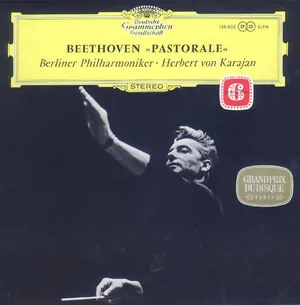
»Pastorale«
January 1, 1962
Listen
1
/5
Genres
Classical Period
The Classical period in Western art music (c. 1750–1820) is defined by clarity of form, balance of phrase, and transparent textures. Composers favored singable melodies, symmetrical four- and eight-bar phrases, and functional harmony that modulates to closely related keys. Hallmark forms such as the symphony, string quartet, sonata, and classical concerto were standardized, often using sonata form, theme-and-variations, minuet and trio, and rondo designs. Orchestras expanded beyond strings to include standardized pairs of woodwinds and horns, with trumpets and timpani for ceremonial weight, while the fortepiano gradually replaced the harpsichord. The style pivoted away from the dense counterpoint of the late Baroque toward a more galant, conversational musical rhetoric. It culminated in the Viennese masters—Haydn, Mozart, and the early Beethoven—whose works crystallized the era’s ideals and prepared the way for Romanticism.
Discover
Listen
Symphony
A symphony is a large-scale composition for orchestra, typically cast in multiple movements that contrast in tempo, key, and character. In the Classical era, the most common layout was four movements: a fast opening movement (often in sonata form), a slow movement, a dance-like movement (minuet or later scherzo), and a fast finale. Over time, the symphony evolved from compact works of the mid-18th century into expansive, architecturally ambitious statements in the 19th and 20th centuries. Composers increasingly treated the symphony as a vehicle for thematic development, cyclical unity, and dramatic narrative—sometimes programmatic, sometimes abstract—using the full coloristic range of the modern orchestra. While rooted in Classical balance and clarity, symphonies incorporate a wide spectrum of harmonic languages and orchestral techniques. From Haydn’s wit and structural innovation to Beethoven’s heroic scope, Mahler’s cosmic breadth, and Shostakovich’s modern intensity, the symphony has remained a central pillar of Western concert music.
Discover
Listen
Western Classical
Western classical is the notated art-music tradition that developed in Europe from medieval Christian chant into the large-scale secular and sacred forms of the Baroque, Classical, Romantic, and modern eras. It is characterized by staff notation, evolving systems of modality and tonality, and forms such as symphony, sonata, concerto, mass, opera, and chamber music. Across its history, Western classical established an extensive theory of harmony and counterpoint, refined orchestration across strings, winds, brass, and percussion, and cultivated performance practices from a cappella chant to full symphonic and operatic forces. Its repertoire, pedagogy, and institutions (conservatories, orchestras, opera houses) made it a global reference point for compositional craft and instrumental technique.
Discover
Listen
European Music
“European music” is a broad umbrella covering the historical and regional practices that developed across the European continent, from medieval sacred chant and courtly song to folk traditions, art (classical) music, and later popular and electronic styles. Common threads include the codification of staff notation, the development of modal and later tonal harmony, the use of structured forms (e.g., mass, motet, madrigal; sonata, symphony, opera; verse–chorus song), and a rich palette of instruments culminating in the modern orchestra and various regional folk ensembles. While extremely diverse from region to region, European music is marked by a continuous dialogue between sacred and secular practices, learned written traditions and oral folk idioms, and later between art music and mass-market popular genres.
Discover
Listen
Similar albums
2007
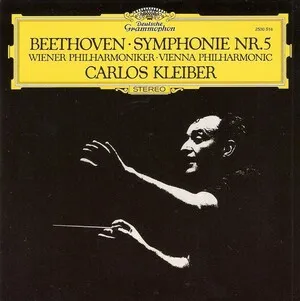
Symphonie Nr.5
Ludwig van Beethoven / Wiener Philharmoniker / Carlos Kleiber
1995
Symphonie Nr.7
Ludwig van Beethoven / Wiener Philharmoniker / Carlos Kleiber
1987
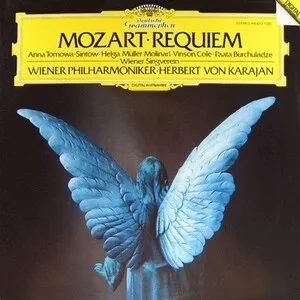
Requiem
Wolfgang Amadeus Mozart / Franz Xaver Süssmayr
1995
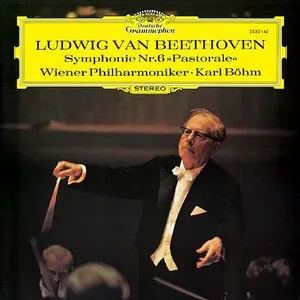
Symphonie Nr. 6 »Pastorale«
Ludwig van Beethoven / Wiener Philharmoniker / Karl Böhm
1963
Symphonie Nr. 7
Ludwig van Beethoven / Berliner Philharmoniker / Herbert von Karajan
1995
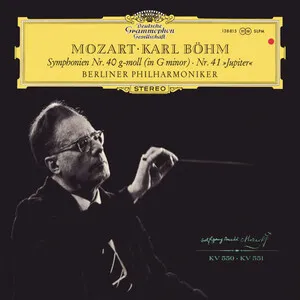
Symphonien Nr. 40 g-Moll; Nr. 41 »Jupiter«
Wolfgang Amadeus Mozart / Berliner Philharmoniker / Karl Böhm
1981
The Goldberg Variations
Johann Sebastian Bach / Glenn Gould
1987
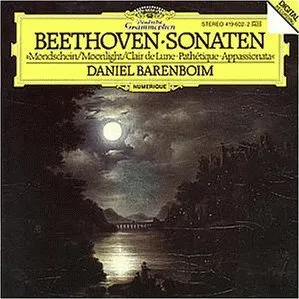
Sonaten: Mondschein; Pathétique; Appassionata
Ludwig van Beethoven / Daniel Barenboim
1984
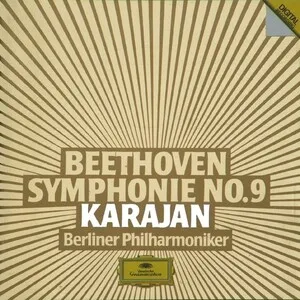
Symphonie No.9
Ludwig van Beethoven / Berliner Philharmoniker / Herbert von Karajan
1985
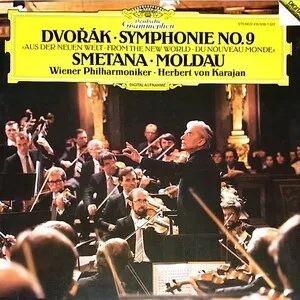
Symphonie No. 9 »Aus der neuen Welt« / Moldau
Antonín Dvořák / Bedřich Smetana
Download our mobile app
Get the Melodigging app and start digging for new genres on the go
Download on the App Store
Get it on Google Play
© 2026 Melodigging
Give feedback
Legal
Melodding was created as a tribute to
Every Noise at Once
, which inspired us to help curious minds keep digging into music's ever-evolving genres.