Genres
Artists
Albums
Make Music
Sign in
Sign in
Albums
By Irvine Arditti
Albums
By Irvine Arditti
No hay caminos, hay que caminar... Andrej Tarkowskij / "Hay que caminar" sognando / Caminantes... Ayacucho
2007
Listen
Genres
New Complexity
New Complexity is a movement in contemporary classical composition characterized by extremely detailed notation, dense polyphonic textures, and intricate rhythmic layers. Composers in this school aim to encode a wealth of micro-level information—articulations, dynamics, timbral inflections, and nuanced temporal relationships—directly into the score. The music typically features nested tuplets, rapidly shifting meters, microtonal pitch structures, and extensive use of extended techniques. While often perceived as virtuosic and formidable, its goal is not complexity for its own sake but the precise realization of highly differentiated sound worlds and continuously transforming textures.
Discover
Listen
Serialism
Serialism is a compositional method in which musical parameters are organized into ordered series that govern a work’s structure. Most famously, twelve‑tone serialism uses an ordered row of the 12 pitch classes, deploying transformations such as prime, inversion, retrograde, and retrograde inversion to avoid traditional tonal hierarchy. While Schoenberg’s twelve‑tone technique focuses on pitch, post‑war composers expanded the idea to "total" or "integral" serialism, applying series to rhythm, dynamics, articulation, timbre, and register. The results often emphasize clarity of event over tonal center, pointillistic textures, and rigorous formal control. Aesthetic outcomes range from Berg’s expressive lyricism to Webern’s ultra‑condensed, crystalline writing, and later to the highly systematized post‑war European avant‑garde. Serialism remains a cornerstone of 20th‑century modernist practice, whether embraced, extended, or reacted against by subsequent movements.
Discover
Listen
Étude
An étude is a short solo instrumental piece, most commonly for piano, designed to develop a specific technical skill while also standing as a musically satisfying work. Emerging in the early 19th century from pedagogical "studies," the concert étude transformed drill-like patterns (arpeggios, octaves, double notes, leaps, rapid scales, polyrhythms) into expressive miniatures suitable for the stage. Typical études are through-composed or ternary in shape, last a few minutes, and center on a single technical focus that is woven into the musical fabric. Although most associated with the piano, the étude tradition extends to violin, winds, brass, and other instruments, where sets of studies target instrument-specific techniques. Over time the genre has ranged from classical tonality (Czerny, Chopin) to late-Romantic and modern harmonic languages (Rachmaninoff, Scriabin, Debussy) and into avant-garde textures and extended techniques (Ligeti).
Discover
Listen
Similar albums
1960
Studie I; Studie II; Gesang der Jünglinge
Karlheinz Stockhausen / Studio für elektronische Musik des Westdeutschen Rundfu…
2012
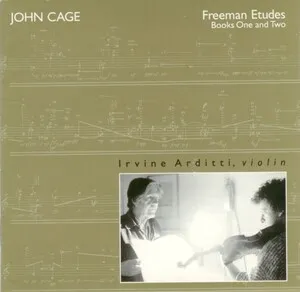
Freeman Etudes: Books One and Two
John Cage / Irvine Arditti
1994
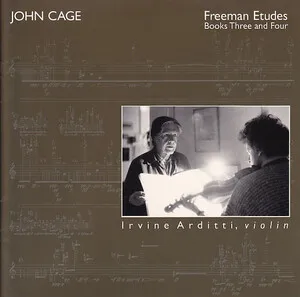
Freeman Etudes: Books Three and Four
John Cage / Irvine Arditti
2017
Piano Works
Philip Glass / Víkingur Ólafsson
2016
Transcendental
Franz Liszt / Daniil Trifonov
2024
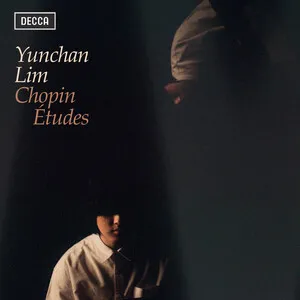
Études
Frédéric Chopin / Yunchan Lim 임윤찬
2015
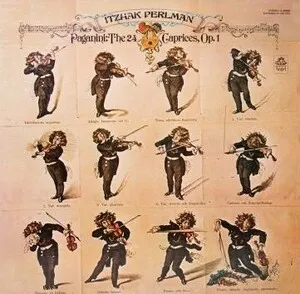
The 24 Caprices, Op. 1
Niccolò Paganini / Itzhak Perlman
2001
Etudes for Piano, Vol. I, No.1-10
Philip Glass
2002
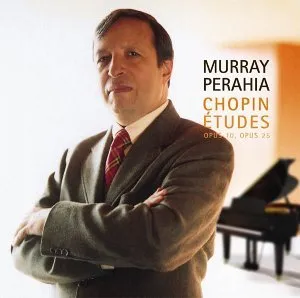
Études: Opus 10, Opus 25
Frédéric Chopin / Murray Perahia
2007
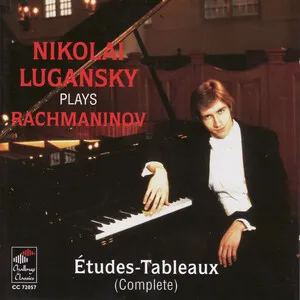
Études-Tableaux (Complete)
Sergey Rakhmaninov Сергей Рахманинов / Nikolai Lugansky
Download our mobile app
Get the Melodigging app and start digging for new genres on the go
Download on the App Store
Get it on Google Play
© 2026 Melodigging
Give feedback
Legal
Melodding was created as a tribute to
Every Noise at Once
, which inspired us to help curious minds keep digging into music's ever-evolving genres.