Romanian folk music is the traditional music of Romania’s villages and small towns, shaped by pastoral life in the Carpathians, Danubian plains, and the Black Sea region. It features a wide spectrum of vocal and dance forms—from the free-rhythm, melismatic doină to propulsive circle dances such as horă and sârbă—and a performance aesthetic rooted in ornamented melody and heterophonic textures.
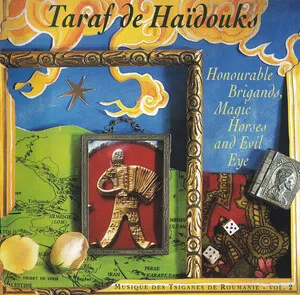
Typical ensembles (taraf) combine fiddle (vioară), cobza (a plucked lute), nai (pan flute), ţambal (cimbalom), accordion, clarinet, and sometimes the tárogató (taragot), shepherd flutes, cimpoi (bagpipe), and tulnic (alpenhorn). Modal melodies (often Dorian, Aeolian, and Mixolydian, with occasional augmented seconds) and asymmetric meters (5/8, 7/8, 9/8) are common, especially in Dobrogea and the south. Socially, the music accompanies weddings, seasonal rituals (colinde/carols, Călușari healing/rite dance), and community gatherings, carrying themes of love, nature, heroism (haiduc ballads), humor, and laments.