Genres
Make Music
Artists
Albums
Challenges
Sign in
Sign in
Albums
By Luigi Nono
Albums
By Luigi Nono
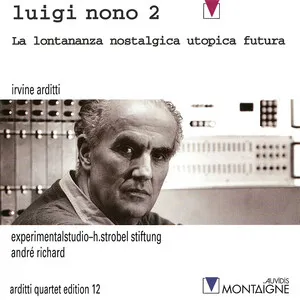
Luigi Nono 2: La lontananza nostalgica utopica futura
January 1, 1992
Listen
1
/5
Genres
Acousmatic
Acousmatic music is a form of electroacoustic composition created specifically for loudspeakers, where the audience hears sounds without seeing their sources. The genre privileges timbre, morphology, and spatial movement over traditional melody and harmony, and it is often experienced in darkened auditoria to sharpen attention to pure listening. Composers typically work with recorded or synthesized sounds—ranging from environmental recordings and instrumental fragments to purely electronic textures—then edit, transform, and organize them into a fixed medium. Performance focuses on diffusion: the live projection of a fixed track across a multichannel loudspeaker array to sculpt space and perspective in real time.
Discover
Listen
Musique Concrète
Musique concrète is an electroacoustic approach to composition that uses recorded real‑world sounds (objets sonores) as primary material rather than traditional instruments or notation. Composers edit, splice, loop, reverse, time‑stretch, filter, and otherwise transform these recordings to create works designed for loudspeakers. Emerging in late‑1940s France, it introduced acousmatic listening—focusing on the sound itself, detached from its source—along with a morphology‑based vocabulary of gesture, texture, and timbre. Historically realized on tape and now on digital audio workstations, musique concrète privileges montage and transformation over conventional harmony and meter, inviting listeners into a rich, tactile world of sonic phenomena.
Discover
Listen
Serialism
Serialism is a compositional method in which musical parameters are organized into ordered series that govern a work’s structure. Most famously, twelve‑tone serialism uses an ordered row of the 12 pitch classes, deploying transformations such as prime, inversion, retrograde, and retrograde inversion to avoid traditional tonal hierarchy. While Schoenberg’s twelve‑tone technique focuses on pitch, post‑war composers expanded the idea to "total" or "integral" serialism, applying series to rhythm, dynamics, articulation, timbre, and register. The results often emphasize clarity of event over tonal center, pointillistic textures, and rigorous formal control. Aesthetic outcomes range from Berg’s expressive lyricism to Webern’s ultra‑condensed, crystalline writing, and later to the highly systematized post‑war European avant‑garde. Serialism remains a cornerstone of 20th‑century modernist practice, whether embraced, extended, or reacted against by subsequent movements.
Discover
Listen
Similar albums
1962
Gesang der Jünglinge; Kontakte
Karlheinz Stockhausen / Studio für elektronische Musik des Westdeutschen Rundfu…
1988
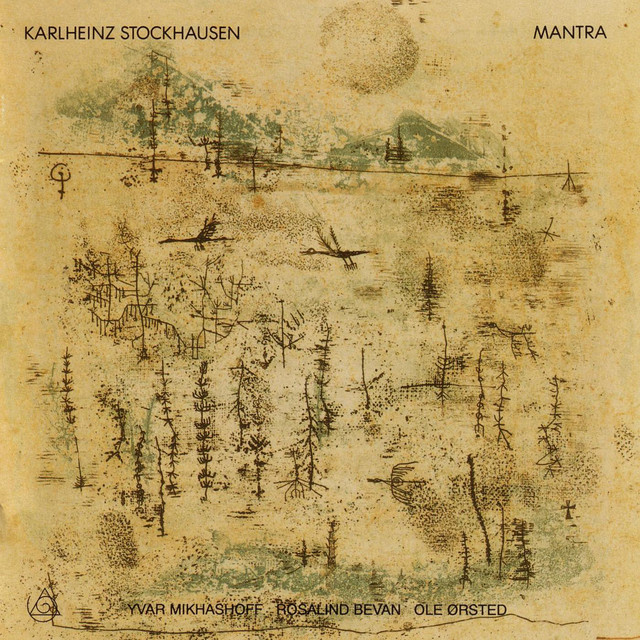
Mantra
Karlheinz Stockhausen
2018
Gesang der Jünlinge
Karlheinz Stockhausen
2017
Automatic Writing
Robert Ashley
2015
De natura sonorum
Bernard Parmegiani
1998
Columbia-Princeton Electronic Music Center 1961-1973
Bülent Arel
2002
Acousmatrix - The History of Electronic Music VII
Luciano Berio
1960
Studie I; Studie II; Gesang der Jünglinge
Karlheinz Stockhausen / Studio für elektronische Musik des Westdeutschen Rundfu…
2007
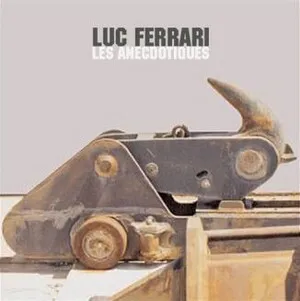
Les anecdotiques: Exploitation de concepts n° 6
Luc Ferrari / Brunhild Meyer-Ferrari
2004
Mean Girls (Original Motion Picture Soundtrack)
Pierre Henry
Download our mobile app
Get the Melodigging app and start digging for new genres on the go
Download on the App Store
Get it on Google Play
© 2026 Melodigging
Give feedback
Legal
Melodding was created as a tribute to
Every Noise at Once
, which inspired us to help curious minds keep digging into music's ever-evolving genres.