Genres
Make Music
Artists
Albums
Challenges
Sign in
Sign in
Albums
By Garth Knox
Albums
By Garth Knox
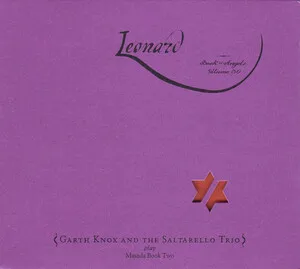
Leonard: The Book of Angels Volume 30
January 27, 2017
Listen
1
/5
Genres
Contemporary Jazz
Contemporary jazz is an umbrella term for post-1970 jazz that absorbs advances from post‑bop, fusion, free jazz, modern classical, and global traditions while retaining the core values of improvisation and interaction. It favors a flexible rhythmic feel (from straight‑8 to polyrhythms), modal and post‑tonal harmony, and a producer’s ear for space, texture, and sound design. Unlike earlier era labels tied to a single movement, contemporary jazz denotes a living, evolving practice. It ranges from intimate acoustic trios to electronics‑enhanced ensembles, often using odd meters, ambient timbres, and song forms that move beyond the 32‑bar standard. The result is a wide spectrum—from lyrical, ECM‑influenced spaciousness to groove‑forward, rhythmically intricate music influenced by funk and world traditions.
Discover
Listen
Jazz
Jazz is an improvisation-centered music tradition that emerged from African American communities in the early 20th century. It blends blues feeling, ragtime syncopation, European harmonic practice, and brass band instrumentation into a flexible, conversational art. Defining features include swing rhythm (a triplet-based pulse), call-and-response phrasing, blue notes, and extended harmonies built on 7ths, 9ths, 11ths, and 13ths. Jazz is as much a way of making music—spontaneous interaction, variation, and personal sound—as it is a set of forms and tunes. Across its history, jazz has continually hybridized, from New Orleans ensembles and big-band swing to bebop, cool and hard bop, modal and free jazz, fusion, and contemporary cross-genre experiments. Its influence permeates global popular and art music.
Discover
Listen
Klezmer
Klezmer is the traditional instrumental music of Ashkenazi Jews from Eastern Europe, originally performed by itinerant bands for weddings and communal celebrations. It is characterized by expressive, voice-like ornamentation (krekhts, slides, trills), flexible phrasing, and a repertoire of dance forms such as freylekhs, bulgar, sher, khosidl, and horas. Modal color is central: the freygish (Ahava Rabbah/Phrygian dominant) and Mi Sheberakh (Ukrainian Dorian) modes are common, lending the music its plaintive, celebratory, and at times bittersweet sound. Typical ensembles feature clarinet or violin as lead, with tsimbl (hammered dulcimer), accordion, trumpet/trombone, bass, and later American additions like piano and drum set. While rooted in Jewish liturgical and Hasidic song, klezmer absorbed 19th‑century European social dances (polka, waltz, mazurka) and Balkan/Romanian influences (notably the free-rhythm doina), producing a flexible style that moves from rhapsodic improvisation to propulsive dance tunes.
Discover
Listen
Ashkenazi Music
Ashkenazi music is the broad musical tradition of Jews from the medieval German lands and, later, Eastern Europe. It spans sacred chant and cantorial practice (khazones), devotional nigunim (wordless melodies), and a rich secular repertoire of Yiddish folk song and dance tunes. Its sound world draws on synagogue nusach (modal prayer formulas) and characteristic modes such as Ahava Rabbah/Freygish (Phrygian dominant) and Ukrainian Dorian, alongside Eastern and Central European folk idioms. Ornamented, melismatic vocal lines, heterophonic textures, and expressive rubato (as in the doina) are common. Instrumentally, the clarinet, violin, tsimbl (hammered dulcimer), accordion, and brass became central—especially in dance forms like freylekhs, bulgar, hora, sher, and khosidl. Lyrically, Yiddish and Hebrew texts range from pious yearning and mystical ecstasy to sharp social observation and celebration of communal life.
Discover
Listen
Classical
Classical music is the notated art-music tradition of Europe and its global descendants, characterized by durable forms, carefully codified harmony and counterpoint, and a literate score-based practice. The term “classical” can refer broadly to the entire Western art-music lineage from the Medieval era to today, not just the Classical period (c. 1750s–1820s). It privileges long-form structures (such as symphonies, sonatas, concertos, masses, and operas), functional or modal harmony, thematic development, and timbral nuance across ensembles ranging from solo instruments to full orchestras and choirs. Across centuries, the style evolved from chant and modal polyphony to tonal harmony, and later to post-tonal idioms, while maintaining a shared emphasis on written notation, performance practice, and craft.
Discover
Listen
Similar albums
1998
The Circle Maker
John Zorn
2009
Colour Yes (Special Edition)
Matthew Halsall
2000
It's Understood
Estradasphere
2000
De Profundis
The Cracow Klezmer Band
2019
The Book Beri'ah Vol. 1: Keter
Sofía Rei & Jean-Christophe Maillard
2007
Volac: Book of Angels Volume 8
Erik Friedlander
2006
Orobas: Book of Angels Volume 4
Koby Israelite
2015
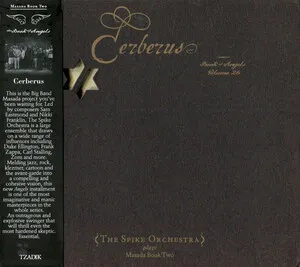
Cerberus: Book of Angels Volume 26
The Spike Orchestra
1994
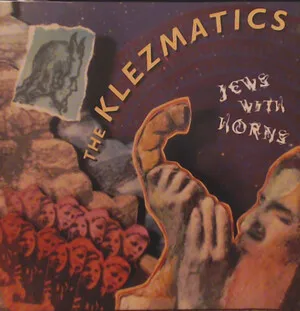
Jews With Horns
The Klezmatics
2012
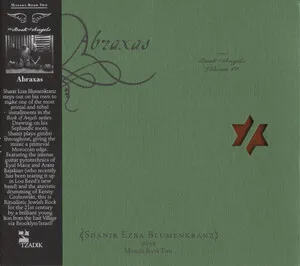
Abraxas: Book of Angels Volume 19
Shanir Ezra Blumenkranz
Download our mobile app
Get the Melodigging app and start digging for new genres on the go
Download on the App Store
Get it on Google Play
© 2026 Melodigging
Give feedback
Legal
Melodding was created as a tribute to
Every Noise at Once
, which inspired us to help curious minds keep digging into music's ever-evolving genres.