Genres
Make Music
Artists
Albums
Challenges
Sign in
Sign in
Albums
By Philip Glass
Albums
By Philip Glass
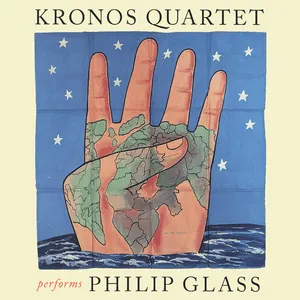
Kronos Quartet Performs Philip Glass
August 30, 2005
Listen
1
/5
Genres
Post-Minimalism
Post-minimalism is a strand of contemporary classical music that grows out of 1960s minimalism but permits greater harmonic variety, expressive shaping, and formal narrative. It retains hallmarks such as steady pulse, repetitive patterns, and clear tonal or modal centers, yet loosens strict process rules, welcomes richer orchestration, and often draws on influences from rock, jazz, and non-Western musics. Compared with early minimalism’s austere procedures, post-minimalist works tend to feature long-arching climaxes, brighter triadic harmony, layered ostinati, and dynamic textural changes, yielding music that can be both hypnotic and overtly dramatic. The style appears in concert works, opera, chamber music, and film, where its driving pulse and luminous harmonies translate into compelling narrative momentum.
Discover
Listen
String Quartet
The string quartet is a cornerstone chamber-music genre scored for two violins, viola, and cello. It typically features a conversational texture where four independent voices share thematic material, balancing melody, harmony, and counterpoint. The classic four‑movement plan (fast sonata‑form, slow movement, minuet/scherzo, and a lively finale) became a hallmark in the Classical era, while later composers expanded and transformed the form, harmony, rhythm, and timbre. From Haydn and Mozart through Beethoven and Schubert to Bartók and Shostakovich, the quartet has served as a laboratory for compositional craft and expressive depth, ranging from intimate lyricism to rigorous structure and avant‑garde experimentation.
Discover
Listen
Chamber Music
Chamber music is a tradition of composed music for small ensembles—typically one player per part—intended for intimate spaces such as courts, salons, and private rooms rather than large public halls. Its aesthetic emphasizes clarity of texture, conversational interplay among parts, and balance without a conductor. Hallmark formations include the string quartet, piano trio, wind quintet, string quintet, and various mixed ensembles. Multi‑movement cycles (often in sonata form) and finely wrought counterpoint are common, ranging from Baroque trio sonatas to Classical string quartets and modern works with expanded timbres and techniques. Because of its scale and transparency, chamber music has long been a proving ground for compositional craft and ensemble musicianship, shaping the core of Western art music from the Baroque through the present.
Discover
Listen
Similar albums
2004
The Late String Quartets
Ludwig van Beethoven / Takács Quartet
1988
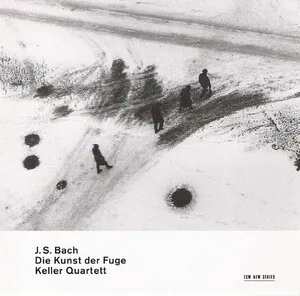
Die Kunst der Fuge
Johann Sebastian Bach / Keller Quartett
1997
The 6 String Quartets
Béla Bartók / Takács Quartet
1988
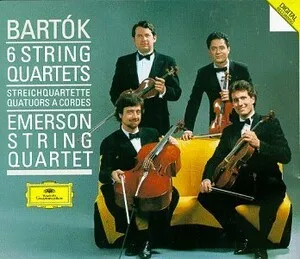
6 String Quartets
Béla Bartók / Emerson String Quartet
1985
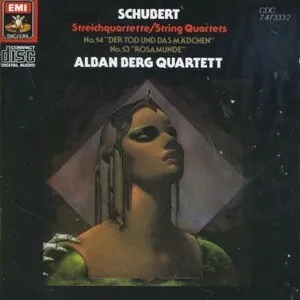
Streichquartette: No. 14 "Der Tod und das Mädchen"; No. 13 "Rosamunde"
Franz Schubert / Alban Berg Quartett
2014
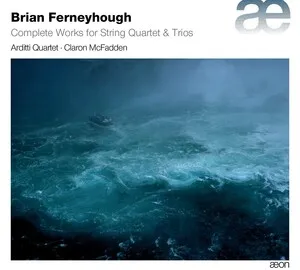
Complete Works for String Quartet & Trios
Brian Ferneyhough / Arditti Quartet / Claron McFadden
2009
Arnold Schoenberg 2: Streichquartette I-IV
Arnold Schoenberg / Arditti Quartet / Dawn Upshaw
1965
The Six String Quartets
Béla Bartók / Juilliard String Quartet
2000
The Complete String Trios and Quartets
Anton Webern / Arditti Quartet
1971
Complete Music for String Quartet
Anton Webern / Quartetto Italiano
Download our mobile app
Get the Melodigging app and start digging for new genres on the go
Download on the App Store
Get it on Google Play
© 2026 Melodigging
Give feedback
Legal
Melodding was created as a tribute to
Every Noise at Once
, which inspired us to help curious minds keep digging into music's ever-evolving genres.