Genres
Make Music
Artists
Albums
Challenges
Sign in
Sign in
Albums
By Frank Sinatra
Albums
By Frank Sinatra
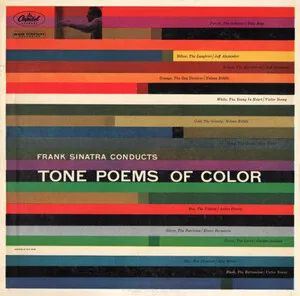
Frank Sinatra Conducts Tone Poems of Color
January 1, 1956
Listen
2
/5
Genres
Easy Listening
Easy listening is a lush, melodic, and unobtrusive style of popular orchestral music designed to be pleasant in the foreground and effortless in the background. It favors smooth textures, lyrical melodies, and gentle rhythms over virtuosic display or dense complexity. Typical arrangements feature string sections, woodwinds, soft brass, vibraphone, harp, piano, subtle Latin or light swing percussion, and sometimes wordless choirs. Repertoire often consists of standards, film and television themes, and instrumental covers of contemporary hits, presented with polished studio production and wide stereo imaging. The mood ranges from romantic and sentimental to breezy and exotic, prioritizing warmth, clarity, and relaxed pacing. Improvisation, if present, is restrained, with harmony that leans on jazzy extensions while staying consonant and approachable.
Discover
Listen
Jazz
Jazz is an improvisation-centered music tradition that emerged from African American communities in the early 20th century. It blends blues feeling, ragtime syncopation, European harmonic practice, and brass band instrumentation into a flexible, conversational art. Defining features include swing rhythm (a triplet-based pulse), call-and-response phrasing, blue notes, and extended harmonies built on 7ths, 9ths, 11ths, and 13ths. Jazz is as much a way of making music—spontaneous interaction, variation, and personal sound—as it is a set of forms and tunes. Across its history, jazz has continually hybridized, from New Orleans ensembles and big-band swing to bebop, cool and hard bop, modal and free jazz, fusion, and contemporary cross-genre experiments. Its influence permeates global popular and art music.
Discover
Listen
Symphonic Poem
A symphonic poem (also called a tone poem) is a single-movement orchestral work that conveys an extra-musical narrative, image, or idea through purely instrumental means. Rather than following traditional multi-movement symphonic forms, it uses flexible structures—often rhapsodic or episodic—to mirror a story, painting, landscape, poem, or philosophical concept. Rooted in Romantic aesthetics, the symphonic poem emphasizes vivid orchestration, thematic transformation, and striking harmonic color to achieve narrative coherence. It commonly deploys leitmotif-like themes that evolve as the program progresses, creating an arc that feels cinematic long before the advent of film scoring.
Discover
Listen
Light Music
Light music is a broadly accessible, less‑serious branch of Western classical music centered on strong, memorable melodies and clear orchestration. Typically through‑composed and concise, it favors self‑contained orchestral miniatures, character pieces, and suites over large symphonic or operatic forms. Emerging from 18th–19th‑century salon, dance, and theatrical traditions, it crystallized as a distinct, audience‑friendly orchestral style whose textures are transparent, harmonies are diatonic with tasteful color, and rhythms often reference marches, waltzes, and gentle dances. In the 20th century it became the sound of radio, cinema shorts, newsreels, and concert light orchestras, providing elegant, tuneful music designed to appeal to a wide public.
Discover
Listen
Classical
Classical music is the notated art-music tradition of Europe and its global descendants, characterized by durable forms, carefully codified harmony and counterpoint, and a literate score-based practice. The term “classical” can refer broadly to the entire Western art-music lineage from the Medieval era to today, not just the Classical period (c. 1750s–1820s). It privileges long-form structures (such as symphonies, sonatas, concertos, masses, and operas), functional or modal harmony, thematic development, and timbral nuance across ensembles ranging from solo instruments to full orchestras and choirs. Across centuries, the style evolved from chant and modal polyphony to tonal harmony, and later to post-tonal idioms, while maintaining a shared emphasis on written notation, performance practice, and craft.
Discover
Listen
Similar albums
1957
This Time With Strings
Raymond Scott and His Orchestra
2024
Christmas (Deluxe 10th Anniversary Edition)
Michael Bublé
2009
Crazy Love
Michael Bublé
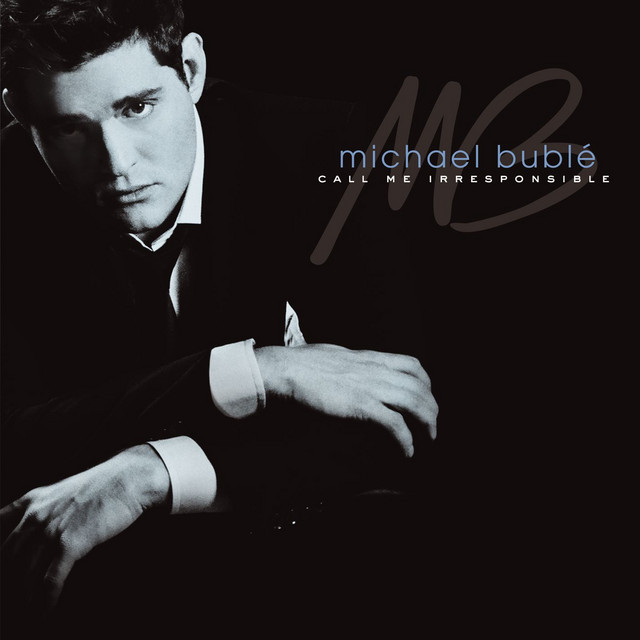
2007
Call Me Irresponsible
Michael Bublé
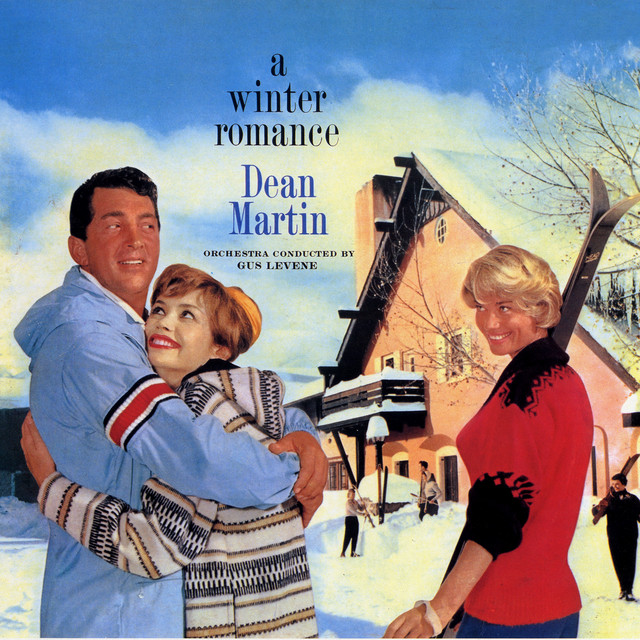
1959
A Winter Romance
Dean Martin
1980
Trilogy: Past, Present & Future
Frank Sinatra
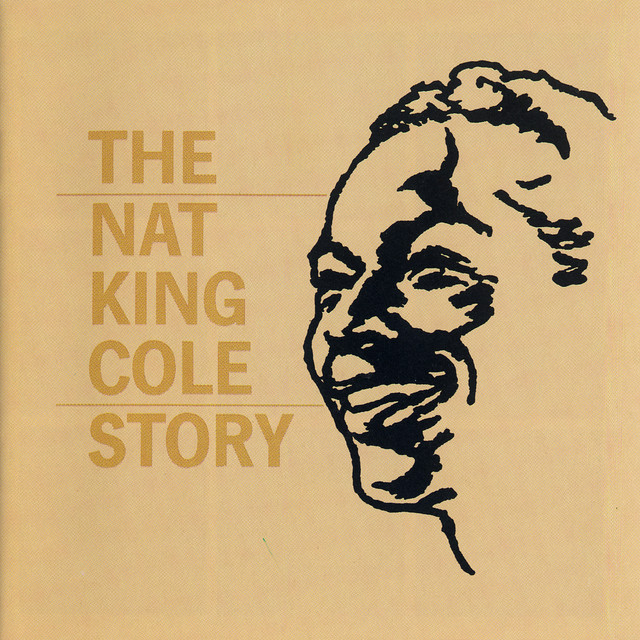
1961
The Nat King Cole Story
Nat King Cole
2011
Christmas
Michael Bublé
1963
The Andy Williams Christmas Album
Andy Williams
1969
Classical Current
Laurindo Almeida
Download our mobile app
Get the Melodigging app and start digging for new genres on the go
Download on the App Store
Get it on Google Play
© 2026 Melodigging
Give feedback
Legal
Melodding was created as a tribute to
Every Noise at Once
, which inspired us to help curious minds keep digging into music's ever-evolving genres.