Genres
Make Music
Artists
Albums
Challenges
Sign in
Sign in
Albums
By Johann Sebastian Bach
Albums
By Johann Sebastian Bach
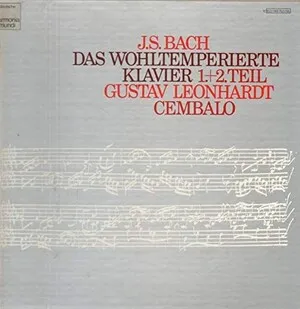
Das wohltemperierte Klavier 1.+2. Teil
1973
Listen
1
/5
Genres
Regional Music
Regional music is an umbrella term for locally rooted musical styles that are strongly tied to a specific place, community, and cultural practice. Rather than denoting one uniform sound, it encompasses many traditions whose instrumentation, rhythms, language, and performance customs reflect the history and daily life of a region. In the recording era, labels, radio programmers, and later streaming platforms used “regional music” to group market- or scene-specific traditions (for example, Cajun in Louisiana, son in Cuba, morna in Cape Verde, or Irish traditional music). The term highlights locality, vernacular identity, and continuity with folk or indigenous practices, even when these styles modernize or cross over into pop and rock contexts.
Discover
Listen
Prelude
A prelude is a short, often improvisatory-sounding instrumental piece that traditionally precedes another work or sets a tonal and expressive atmosphere on its own. Emerging in the early Baroque era from the practice of freely extemporizing before a liturgical or secular performance, the prelude evolved from unmeasured lute and keyboard introductions into highly crafted pieces for organ, harpsichord, and later piano. In the 19th century it became an autonomous character piece (e.g., Chopin’s Op. 28), while in the 20th century composers explored cyclic sets across all keys and a wide range of styles (Debussy, Rachmaninoff, Shostakovich). Despite its brevity and flexibility, the prelude typically establishes a key or mode, a figuration pattern, and a distinct mood, favoring clear tonal focus, continuous flow, and a compelling gesture over strict formal constraints.
Discover
Listen
Baroque
Baroque is a period and style of Western art music spanning roughly 1600–1750. It is characterized by the birth of functional tonality, the widespread use of basso continuo (figured bass), and a love of contrast—between soloist and ensemble, loud and soft, and different timbres. Hallmark genres and forms of the era include opera, cantata, oratorio, concerto (especially the concerto grosso), dance suite, sonata, and fugue. Textures range from expressive monody to intricate counterpoint, and melodies are richly ornamented with trills, mordents, and appoggiaturas. Baroque music flourished in churches, courts, and theaters across Europe, with regional styles (Italian, French, German, English) shaping distinctive approaches to rhythm, dance, harmony, and ornamentation.
Discover
Listen
Fugue
A fugue is a contrapuntal composition built around a single, clearly defined musical subject that is imitated and developed across multiple independent voices. One voice introduces the subject, and subsequent voices enter successively with an answer (a transposed version of the subject), often accompanied by a recurring countersubject. After the exposition, episodes made from fragments of the subject and countersubject modulate to related keys and prepare further entries. Composers employ devices such as inversion, augmentation, diminution, stretto, and pedal points to intensify the texture and drive form. Fugues appear as stand‑alone keyboard or organ works, as movements in chamber and orchestral music, and as sections within larger vocal or instrumental genres.
Discover
Listen
Classical
Classical music is the notated art-music tradition of Europe and its global descendants, characterized by durable forms, carefully codified harmony and counterpoint, and a literate score-based practice. The term “classical” can refer broadly to the entire Western art-music lineage from the Medieval era to today, not just the Classical period (c. 1750s–1820s). It privileges long-form structures (such as symphonies, sonatas, concertos, masses, and operas), functional or modal harmony, thematic development, and timbral nuance across ensembles ranging from solo instruments to full orchestras and choirs. Across centuries, the style evolved from chant and modal polyphony to tonal harmony, and later to post-tonal idioms, while maintaining a shared emphasis on written notation, performance practice, and craft.
Discover
Listen
European Music
“European music” is a broad umbrella covering the historical and regional practices that developed across the European continent, from medieval sacred chant and courtly song to folk traditions, art (classical) music, and later popular and electronic styles. Common threads include the codification of staff notation, the development of modal and later tonal harmony, the use of structured forms (e.g., mass, motet, madrigal; sonata, symphony, opera; verse–chorus song), and a rich palette of instruments culminating in the modern orchestra and various regional folk ensembles. While extremely diverse from region to region, European music is marked by a continuous dialogue between sacred and secular practices, learned written traditions and oral folk idioms, and later between art music and mass-market popular genres.
Discover
Listen
Western Classical
Western classical is the notated art-music tradition that developed in Europe from medieval Christian chant into the large-scale secular and sacred forms of the Baroque, Classical, Romantic, and modern eras. It is characterized by staff notation, evolving systems of modality and tonality, and forms such as symphony, sonata, concerto, mass, opera, and chamber music. Across its history, Western classical established an extensive theory of harmony and counterpoint, refined orchestration across strings, winds, brass, and percussion, and cultivated performance practices from a cappella chant to full symphonic and operatic forces. Its repertoire, pedagogy, and institutions (conservatories, orchestras, opera houses) made it a global reference point for compositional craft and instrumental technique.
Discover
Listen
Similar albums
1981
The Goldberg Variations
Johann Sebastian Bach / Glenn Gould
1999
Matthäus-Passion
Johann Sebastian Bach
1985
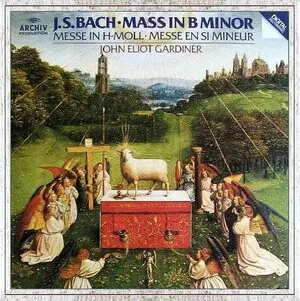
Mass in B minor
Johann Sebastian Bach / John Eliot Gardiner
1963
The Well-Tempered Clavier: Book I - Preludes and Fugues 1-8
Johann Sebastian Bach / Glenn Gould
1992
Suites for Violoncello Solo, BWV 1007-1012
Johann Sebastian Bach / Anner Bylsma
1964
The Well-Tempered Clavier: Book I - Preludes and Fugues 9-16
Johann Sebastian Bach / Glenn Gould
1965
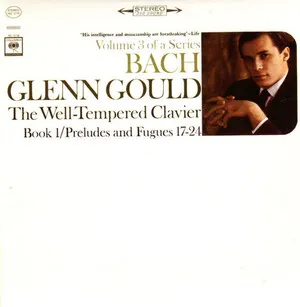
The Well-Tempered Clavier: Book 1 - Preludes and Fugues 17-24
Johann Sebastian Bach / Glenn Gould
2007
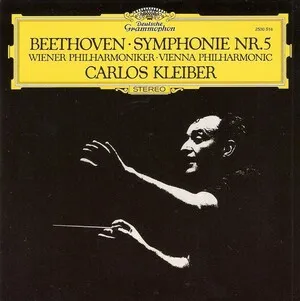
Symphonie Nr.5
Ludwig van Beethoven / Wiener Philharmoniker / Carlos Kleiber
1987
Requiem
Wolfgang Amadeus Mozart / Franz Xaver Süssmayr
1989
The Brandenburg Concertos
Johann Sebastian Bach / Orchestra of the Age of Enlightenment
Download our mobile app
Get the Melodigging app and start digging for new genres on the go
Download on the App Store
Get it on Google Play
© 2026 Melodigging
Give feedback
Legal
Melodding was created as a tribute to
Every Noise at Once
, which inspired us to help curious minds keep digging into music's ever-evolving genres.