Genres
Make Music
Artists
Albums
Challenges
Sign in
Sign in
Albums
By Aragehonzi アラゲホンジ
Albums
By Aragehonzi アラゲホンジ
はなつおと
September 7, 2016
Listen
1
/5
Genres
Experimental
Experimental music is an umbrella term for practices that prioritize exploration, process, and discovery over adherence to established genre norms. It embraces new sound sources, nonstandard tuning systems, indeterminacy and chance operations, graphic and open-form scores, extended techniques, and technology-led sound design (tape, electronics, computers, and live processing). Rather than a single style, it is a methodology and ethos: testing hypotheses about sound, structure, and performance, often blurring boundaries between composition, improvisation, sound art, and performance art. Listeners can expect unfamiliar timbres, unusual forms, and an emphasis on how music is made as much as the resulting sound.
Discover
Listen
Min'yō
Min'yō refers to the diverse body of Japanese folk songs that arose from everyday life—work, festivals, travel, drinking gatherings, and lullabies—across regions of Japan. The songs are typically strophic, use local dialects, and often include onomatopoeic calls and interjections (kakegoe) such as “sore!” or “yoisho!” that energize group participation. Musically, min'yō commonly employs Japanese pentatonic scales—especially the anhemitonic yo scale and the hemitonic in-sen scale—with characteristic melismatic ornaments (kobushi), tight, bright vocal timbres, and flexible timing that respects ma (expressive space). Accompaniments are traditionally provided by shamisen, shinobue (transverse bamboo flute), shakuhachi, taiko and hand drums, and sometimes koto, with heterophonic textures rather than harmonic progressions. Stylistically, subtypes such as “-bushi” and “-ondo” reflect narrative vs. dance-oriented tendencies, respectively, with well-known regional examples like Soran-bushi (Hokkaidō), Tsugaru folk repertoire (Aomori), and Sado okesa (Niigata).
Discover
Listen
Japanese Folk Music
Japanese folk music (min'yō and related regional traditions) is the collective body of vernacular song and instrumental practices that arose among Japan’s rural and coastal communities. It includes work songs (rice-planting, fishing, sake-brewing), festival and dance songs (Bon-odori), travelers’ and boatmen’s songs, lullabies, and ritual/seasonal chants. Melodies commonly draw on pentatonic collections such as the yo and in scales, and are richly ornamented with kobushi (vocal turns) and flexible timing shaped by ma (intentional silence/space). Textures are largely monophonic or heterophonic, with unison singing doubled by instruments like shamisen, fue (transverse bamboo flutes), shakuhachi, and sometimes koto; taiko and local percussion support dance and procession contexts. Regional styles (e.g., Tsugaru in the north, Amami in the south, Okinawa and Ainu traditions) contribute distinctive timbres, rhythms, and repertories that together define the breadth of Japanese folk expression.
Discover
Listen
Similar albums
2017
Echoes of Japan (エコーズ・オブ・ジャパン)
Minyo Crusaders
2015
Japanese Masterpieces for the Koto
Master Musicians of Ikuta-Ryu
2024
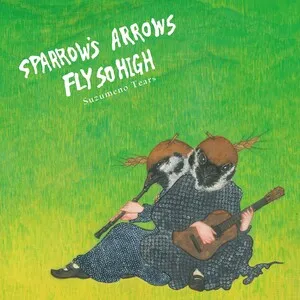
Sparrow's Arrows Fly So High
Suzumeno Tears すずめのティアーズ
2001
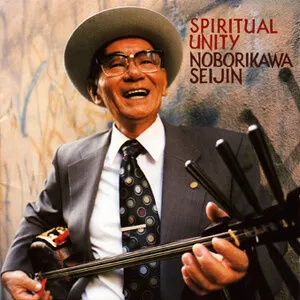
Spiritual Unity
Seijin Noborikawa 登川誠仁
2023
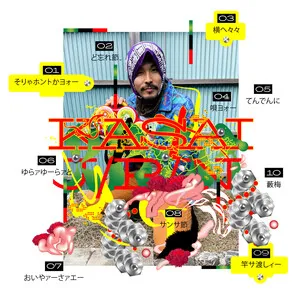
J/P/N
Kasai
2025
LUX
ROSALÍA
2016
wannabewithu
Cuco
2012
Visions
Grimes
2015
White Light
Sidewalks and Skeletons
2012
Visions
Grimes
Download our mobile app
Get the Melodigging app and start digging for new genres on the go
Download on the App Store
Get it on Google Play
© 2026 Melodigging
Give feedback
Legal
Melodding was created as a tribute to
Every Noise at Once
, which inspired us to help curious minds keep digging into music's ever-evolving genres.