Genres
Make Music
Artists
Albums
Challenges
Sign in
Sign in
Albums
By Amynedd
Albums
By Amynedd
16-Bit Adventure
October 20, 2020
Listen
2
/5
Genres
Chillwave
Chillwave is a late-2000s microgenre of electronic pop characterized by hazy, retro-tinged synthesizers, lo‑fi textures, understated drum machines, and heavily processed, dreamlike vocals. Its sound evokes sun-faded nostalgia, often referencing 1980s synth-pop and soft rock atmospheres filtered through cassette hiss, chorus, and reverb. Built by bedroom producers during the blog era, chillwave prizes mood over virtuosity: gentle major-seventh harmonies, loop-friendly motifs, and sidechain‑pumped pads create a warm, gauzy drift. Visual and conceptual aesthetics—VHS artifacts, pastel palettes, palm trees, and memories of an endless summer—are integral to its identity.
Discover
Listen
Bit Music
Bit music is a broad term for music built around the sound and constraints of low bit‑depth digital audio, early sound chips, and primitive computer/console hardware. It foregrounds square and pulse waves, noise channels, simple PCM, and the characteristic artifacts of bit‑crushing and low sample rates. While closely related to chiptune, bit music emphasizes the sonic signature of "the bit" itself: 1‑bit beeper techniques, 4/8/16‑bit sample playback, and tracker-based sequencing that exploits extremely limited polyphony and memory. The result is a bright, pixelated timbre that celebrates computational austerity through clever composition tricks, rapid arpeggios, duty‑cycle modulation, and noise percussion.
Discover
Listen
Chiptune
Chiptune (also called chip music or 8-bit music) is a style of electronic music created with, or emulating, the programmable sound generator (PSG) and FM chips found in vintage game consoles and home computers such as the NES/Famicom, Game Boy, Commodore 64 (SID), Amiga, Atari ST, and others. The sound palette is defined by simple waveforms (square/pulse, triangle, saw, noise), rapid arpeggios that imply chords on limited channels, pitch bends, duty-cycle modulation, and crunchy noise percussion. These constraints lend chiptune its bright, percussive, and highly melodic character, often evoking early video-game aesthetics. While originally utilitarian—music for games and computer demos—the approach evolved into a standalone art form. Contemporary chiptune spans pure hardware-authentic tracks and hybrid productions that blend chip timbres with modern synthesis, drums, vocals, and mixing techniques.
Discover
Listen
Fm Synthesis
FM synthesis is a sound-design–driven electronic style built around frequency modulation techniques, where one oscillator (the modulator) alters the frequency of another (the carrier) to create complex, evolving spectra. The result is famously bright, glassy, and metallic timbres—bell tones, electric pianos, plucks, basses, and inharmonic percussion—that are difficult to achieve with subtractive or wavetable methods. As a musical aesthetic, FM synthesis coalesced around the Yamaha DX series (especially the DX7, 1983) and later 4‑operator units like the TX81Z, spreading through 1980s pop, city pop, new age, jazz fusion, and game music. Its signature presets (e.g., "E. PIANO 1", "Lately Bass") defined the sonic palette of mid‑80s to early‑90s recordings, while FM chips in consoles and arcades shaped the sound of an entire era of video games. Today, FM remains a distinct compositional palette: crystalline highs, punchy transient detail, and harmonically rich but precise tones that can feel both futuristic and nostalgic.
Discover
Listen
Soundtrack
Soundtrack is music created to accompany and enhance visual media such as film, television, and video games. It includes original scores (instrumental or vocal music composed specifically for the picture) and, at times, curated compilations of pre-existing songs. Stylistically, soundtrack is a meta-genre that can encompass orchestral symphonic writing, jazz, electronic and synth-driven textures, choral forces, popular song, and experimental sound design. Its defining trait is functional storytelling: themes, motifs, harmony, rhythm, and timbre are shaped by narrative needs, character psychology, pacing, and editing. Common features include leitmotifs for characters or ideas, modular cues that can be edited to picture, dynamic orchestration for dramatic range, and production approaches that sit well under dialogue and sound effects. Because it must synchronize to picture, soundtrack often uses clear dramatic arcs, tempo maps, and hit points.
Discover
Listen
Electronic
Electronic is a broad umbrella genre defined by the primary use of electronically generated or electronically processed sound. It encompasses music made with synthesizers, drum machines, samplers, computers, and studio/tape techniques, as well as electroacoustic manipulation of recorded or synthetic sources. The genre ranges from academic and experimental traditions to popular and dance-oriented forms. While its sonic palette is rooted in electricity and circuitry, its aesthetics span minimal and textural explorations, structured song forms, and beat-driven club permutations. Electronic emphasizes sound design, timbre, and studio-as-instrument practices as much as melody and harmony.
Discover
Listen
Similar albums
2015
Ember
Kubbi
2021
Motorway
Fearofdark
2018
INTERRUPT REQUEST
Master Boot Record
2014
The Secret Mirror
Rainbowdragoneyes
2017
Exit Plan
Fearofdark
2013
Level
Disasterpeace
2013
Rise of the Obsidian Interstellar
Disasterpeace
2014
French Exit
TV Girl
2011
Minecraft - Volume Alpha
C418
2014
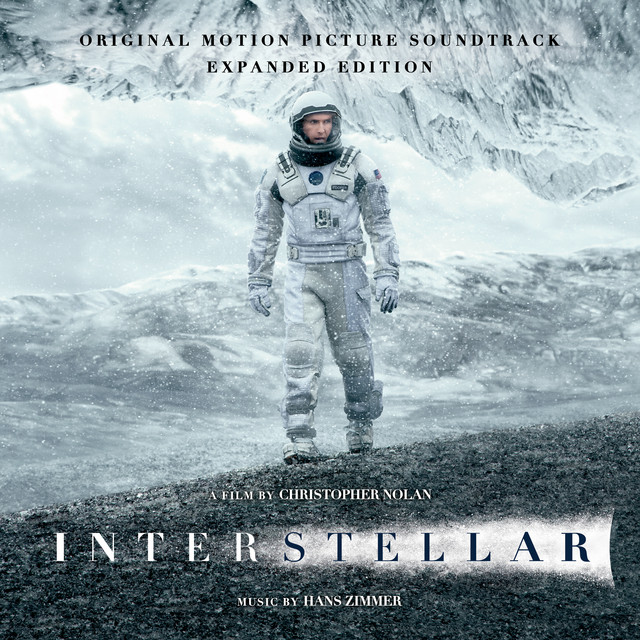
Interstellar (Original Motion Picture Soundtrack) [Expanded Edition]
Hans Zimmer
Download our mobile app
Get the Melodigging app and start digging for new genres on the go
Download on the App Store
Get it on Google Play
© 2026 Melodigging
Give feedback
Legal
Melodding was created as a tribute to
Every Noise at Once
, which inspired us to help curious minds keep digging into music's ever-evolving genres.